The Final
By Cynara Vetch
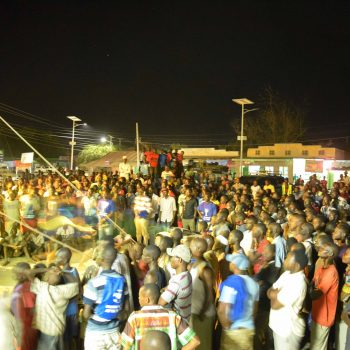
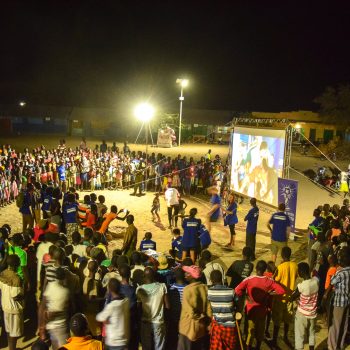
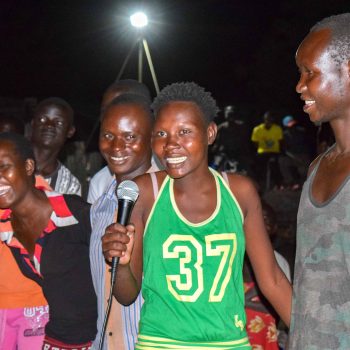
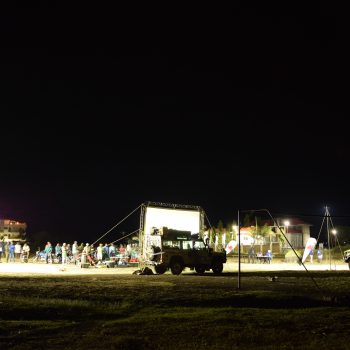
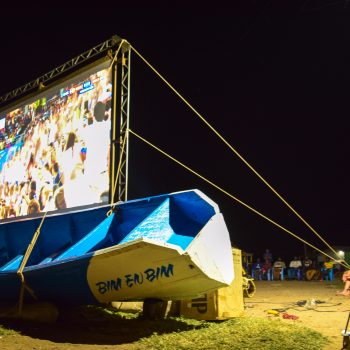
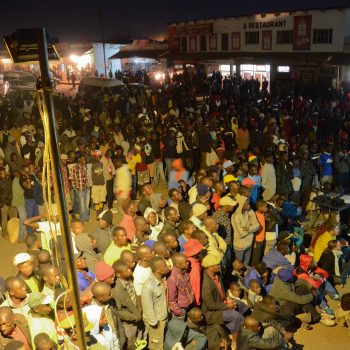
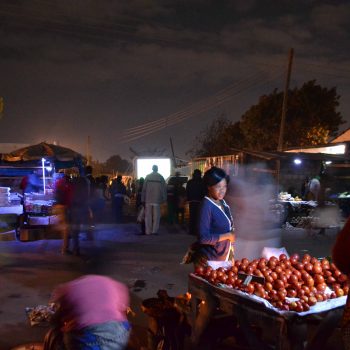
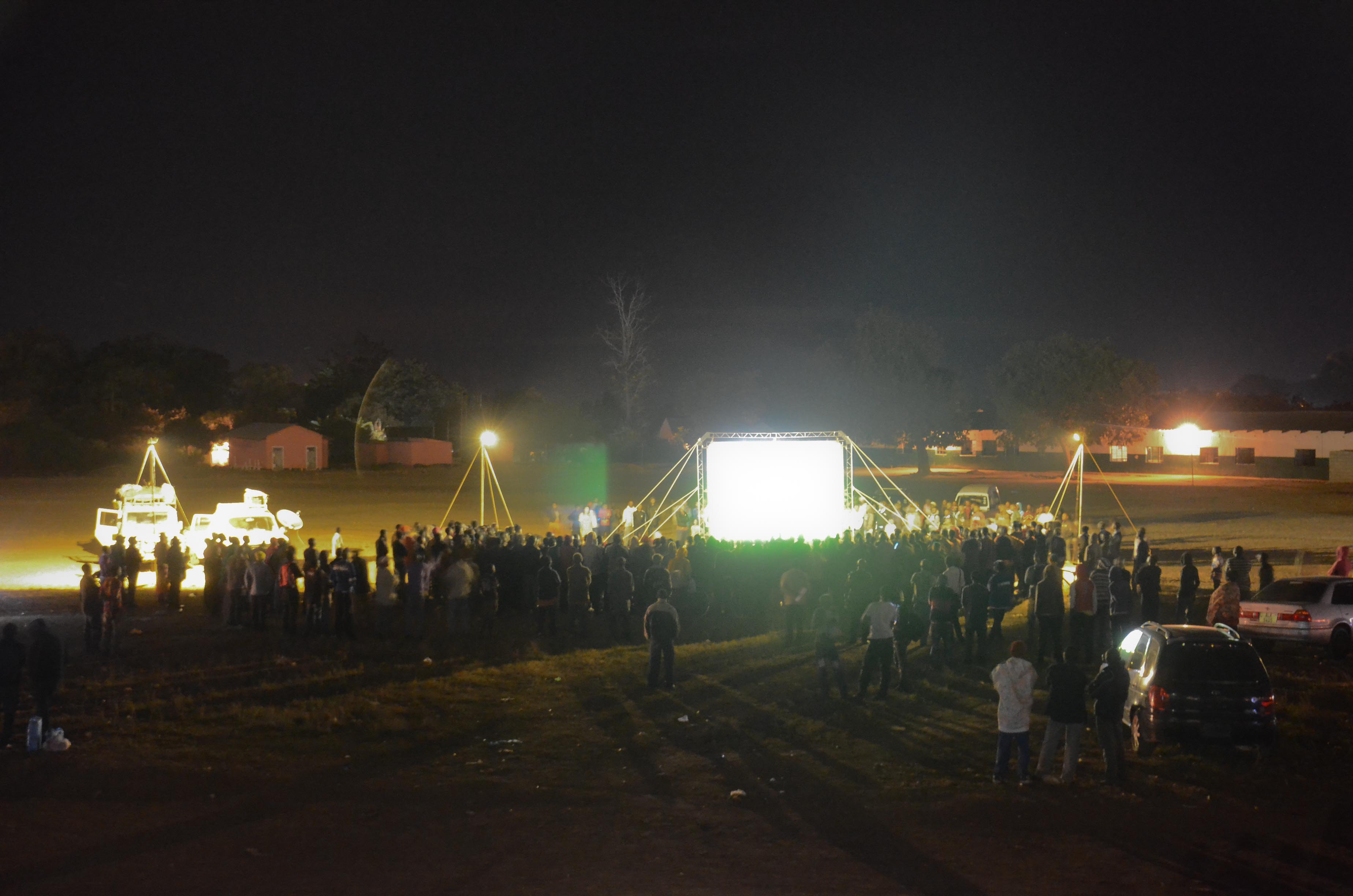
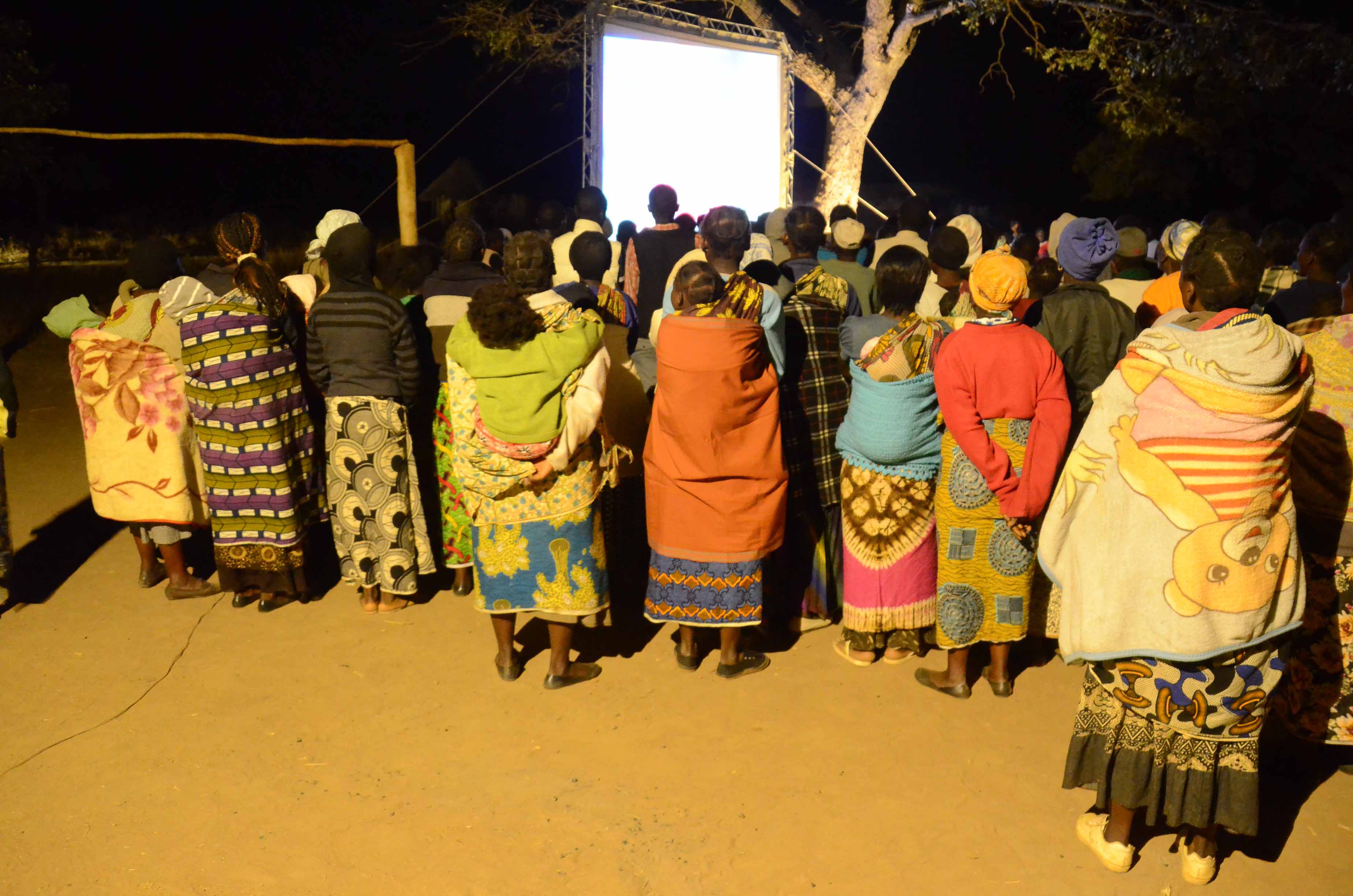
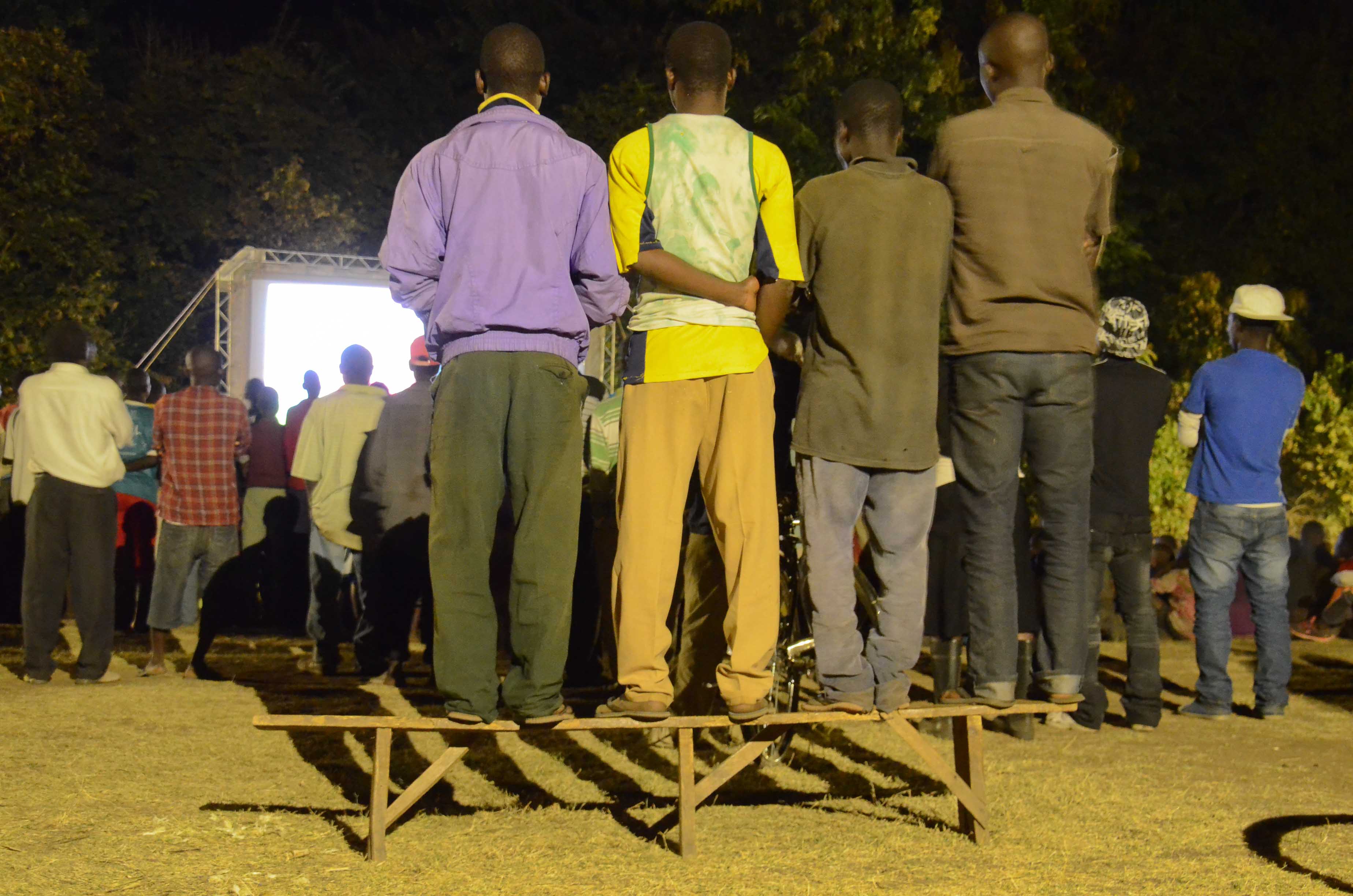
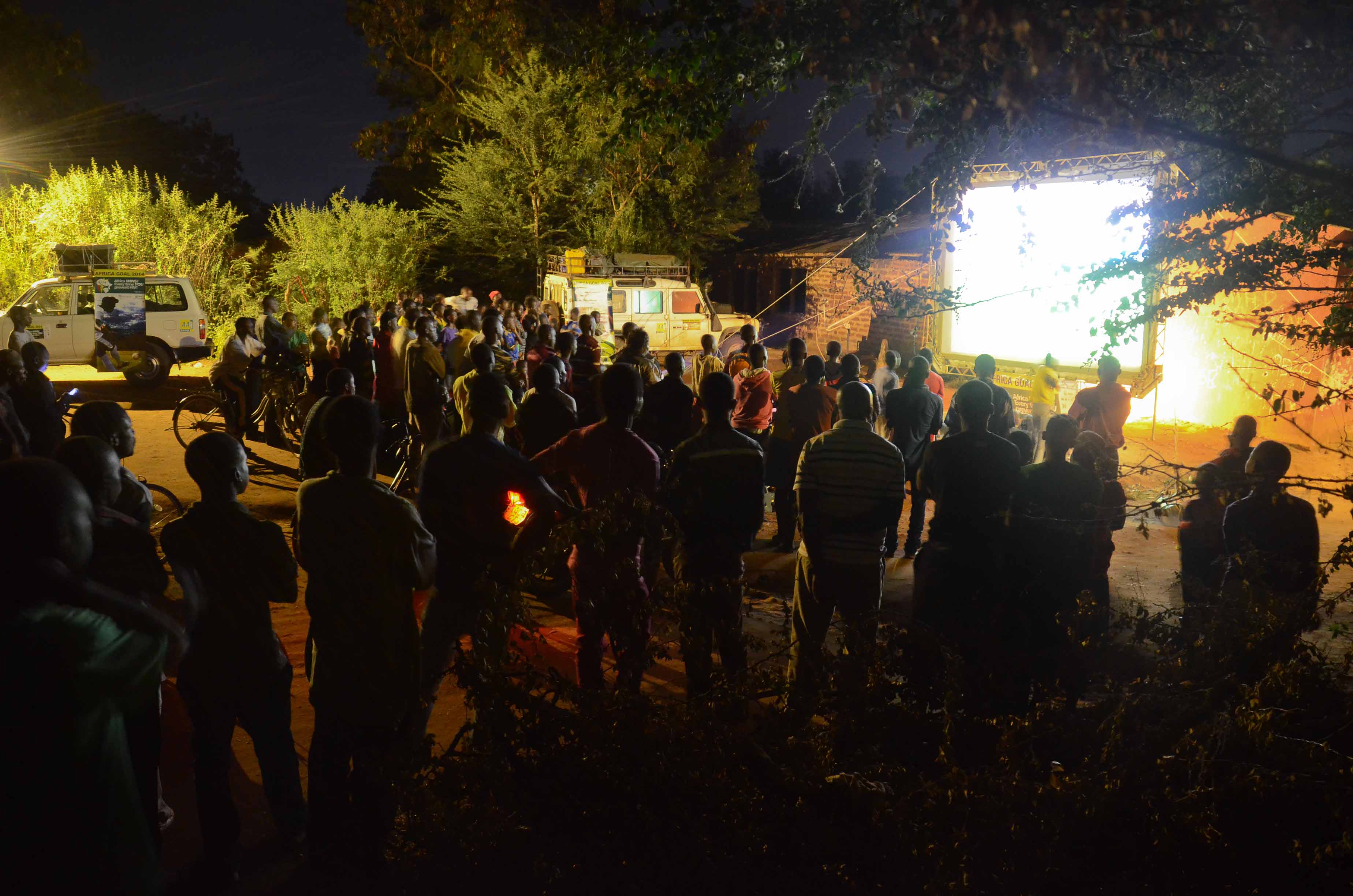
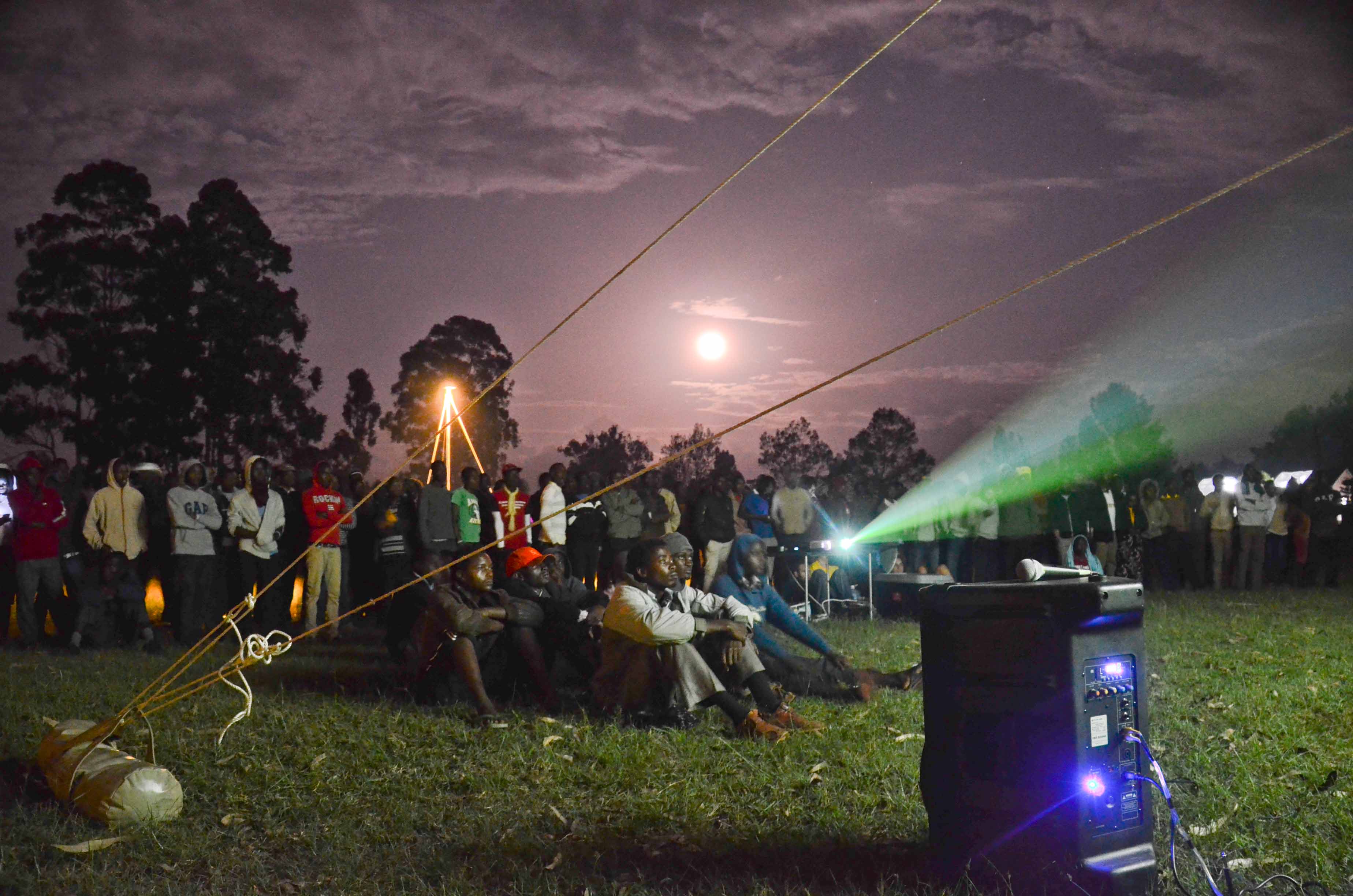
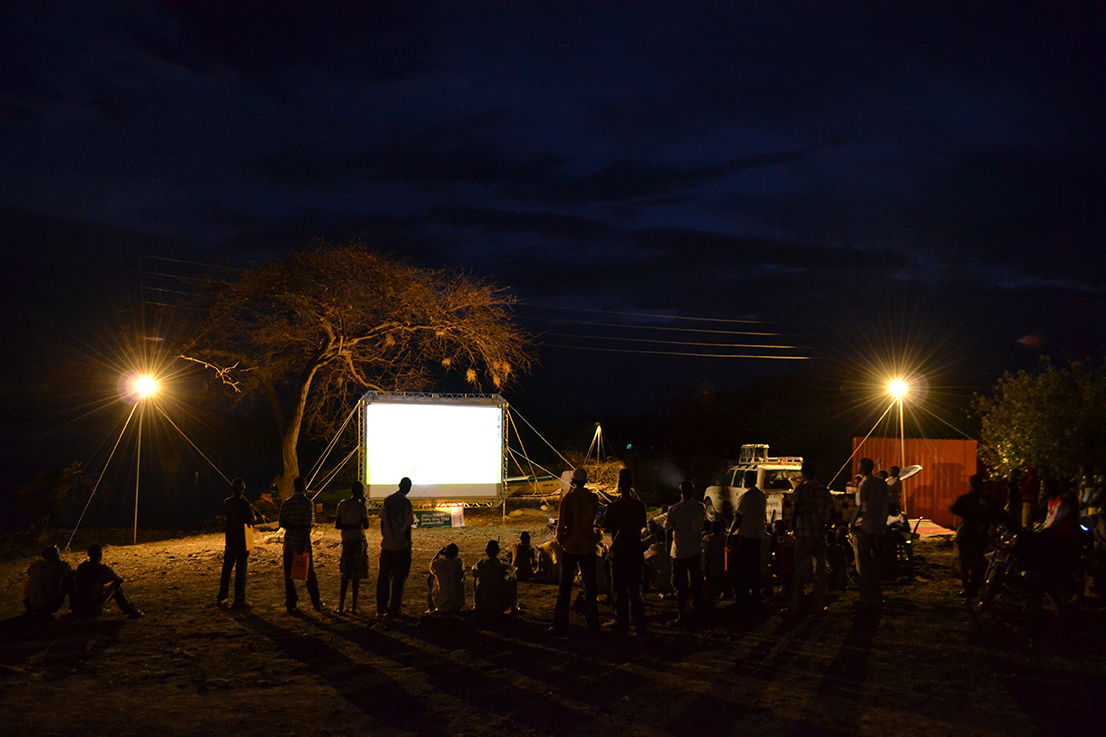
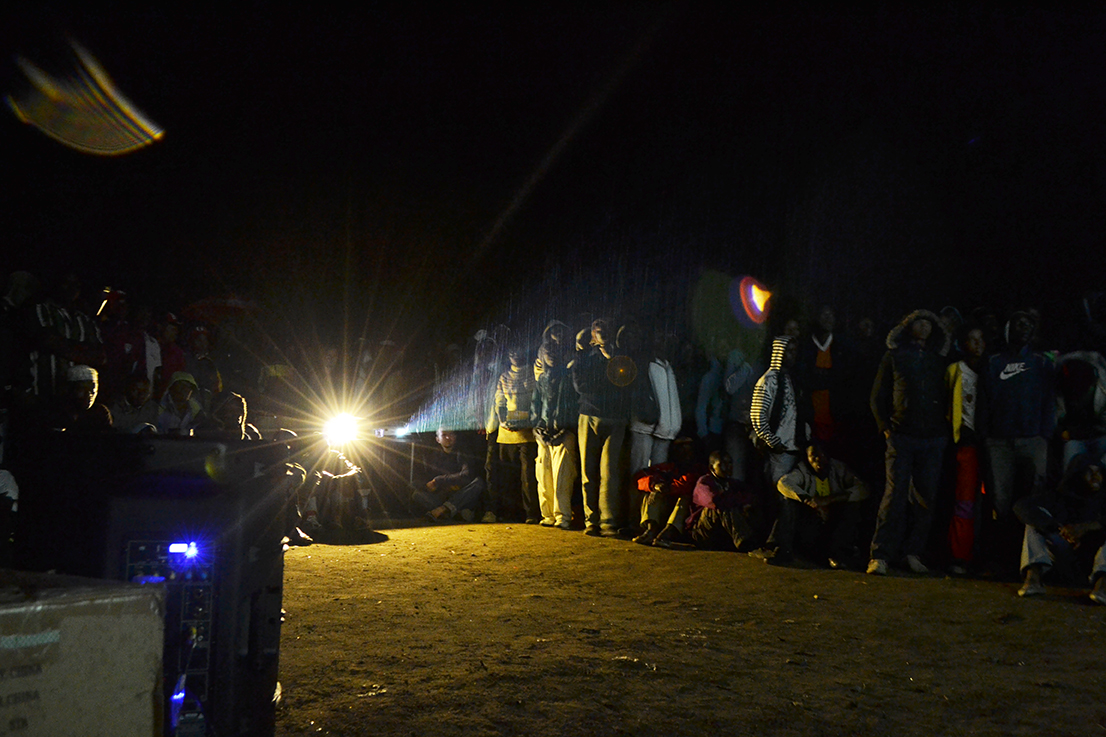
For the last game we projected the match wide and high across the wall of a town hall of Ward 13 in Jozini town, Kwa Zulu Natal.
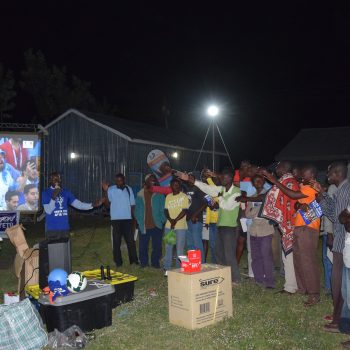
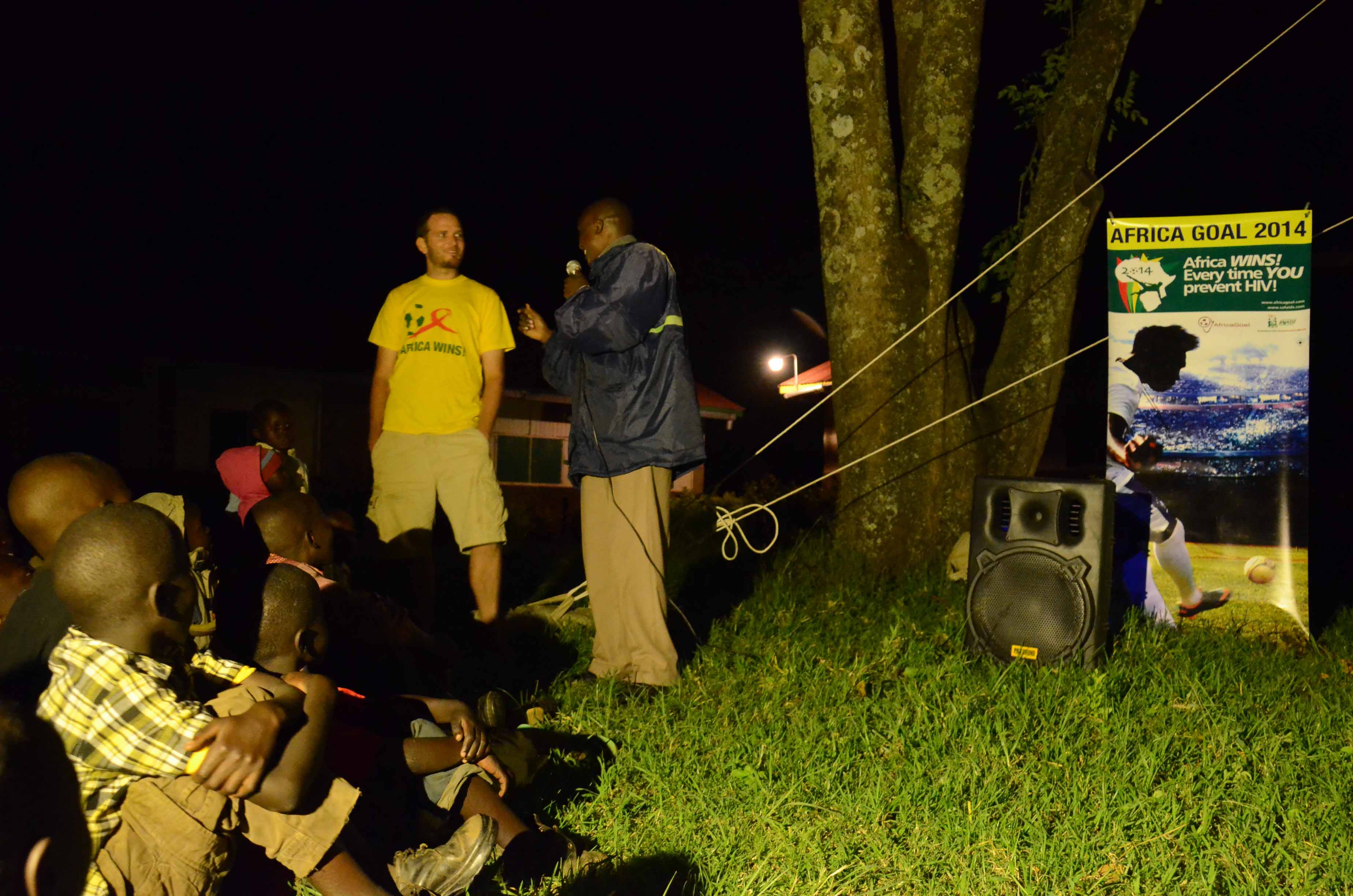
Phineas Mpanza, the councillor of Ward 13 spoke to the crowd. “Feel it!” he cried, “It is here!” shouted back the crowd. Sthandwa Mnqayi, a Research Manger from AMREF who we were partnering with, explained “That ‘s one of the slogans for the World Cup and for the first time tonight it really is here for them.”
Phineas was also in a celebratory mood “I feel good…that in my lifetime the World Cup is coming here. I was thinking can we do this? We are a small country but as it continued and continued we saw that we are coming to a global world in South Africa and many people around here are very, very happy.”
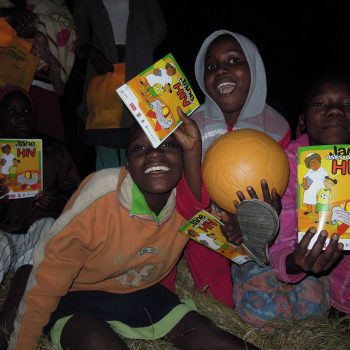
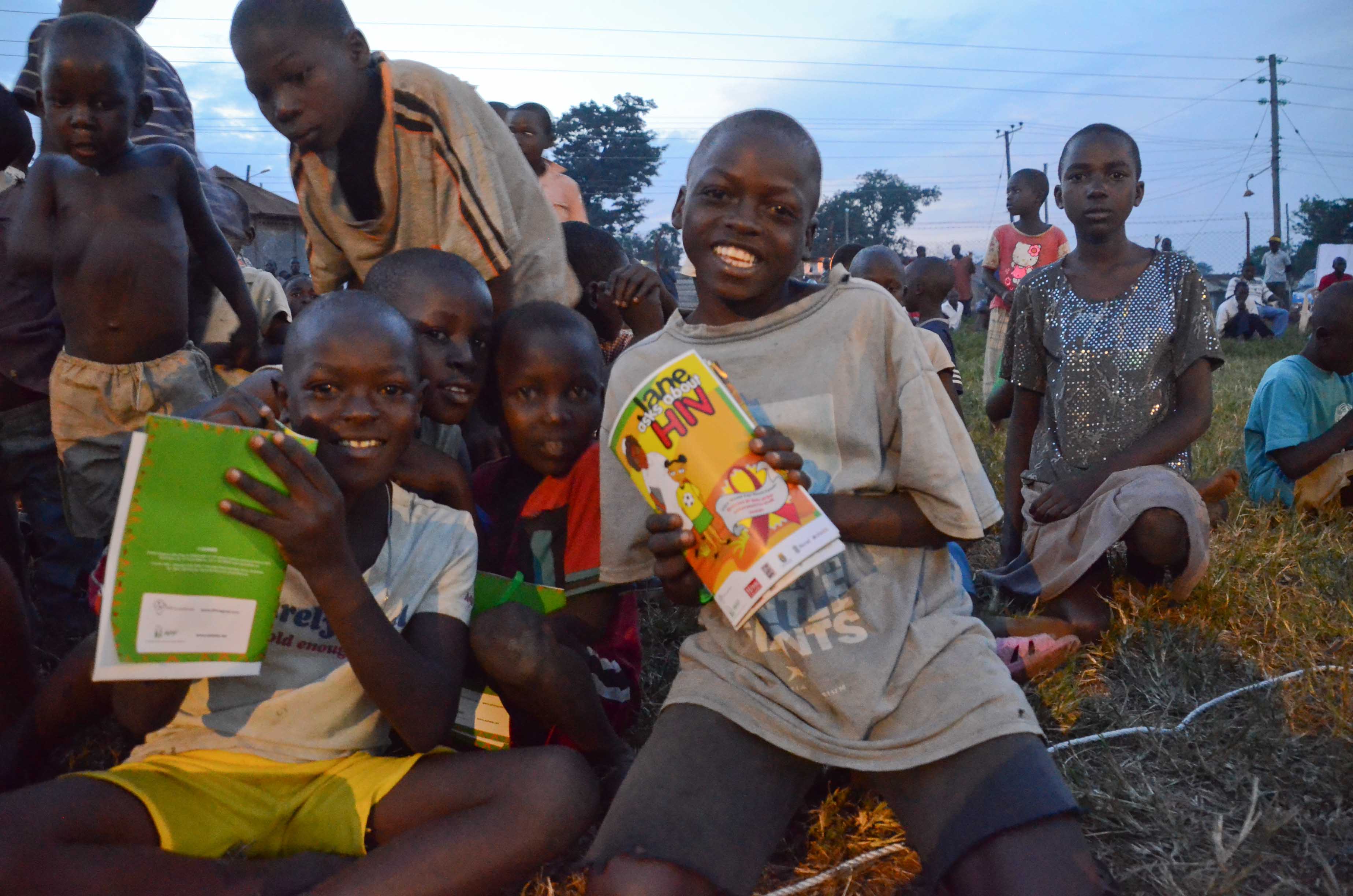
We handed out HIV information packages in football bags and soon everyone was clutching one flicking through their booklets and examining their posters. Then we sat down for a One Love video about a couple who are both having extramarital affairs and how one HIV positive individual puts them all at risk.
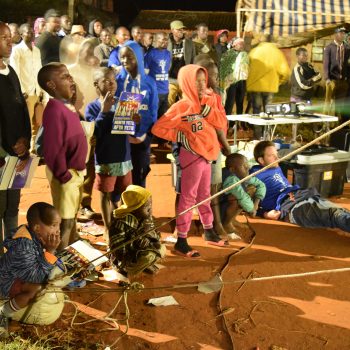
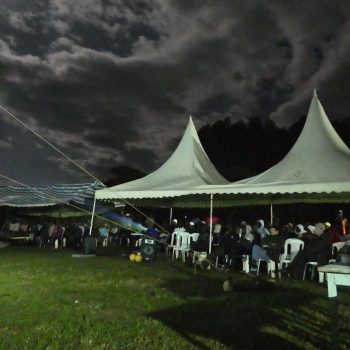
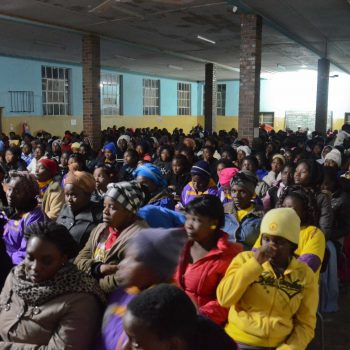
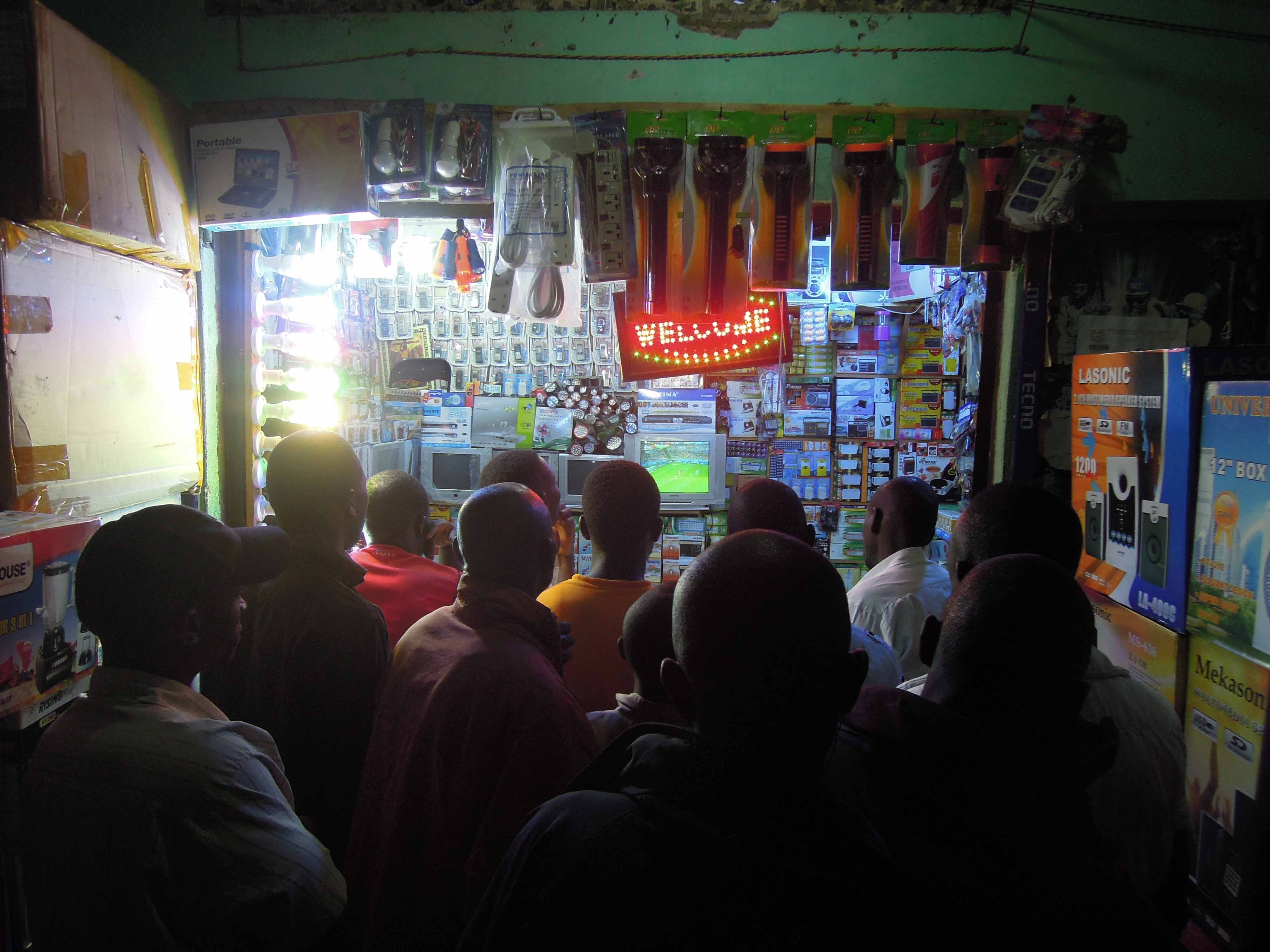
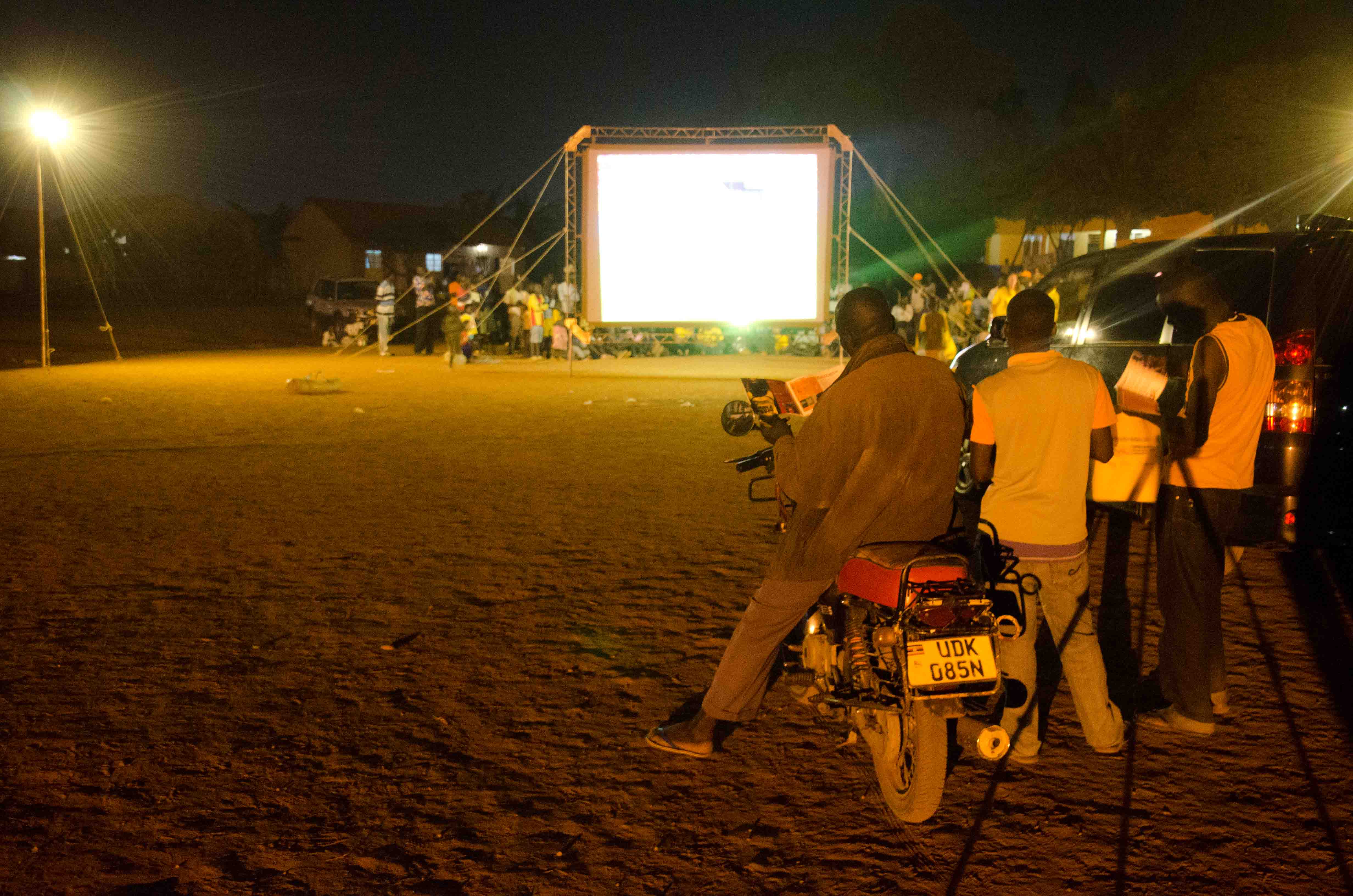
As we projected the closing ceremony before the game, the crowd built up and filled the space. Shakira did her thing and the vuvuzelas blared out, the sound bouncing against the concrete walls and echoing around the room. Finally it was time for the match, the noise swelled and then died out as the players ran onto the pitch.
Spain seemed in control for much of the game with the Dutch looking nervous at the opening of the match. The audience was evenly split between Dutch and Spanish supporters and both sides were frustrated about the lack of goals. After going into extra time it looked like we had to get ready for a penalty shoot out but after a tense 28th minute Spain managed to score a goal and we had a victor.
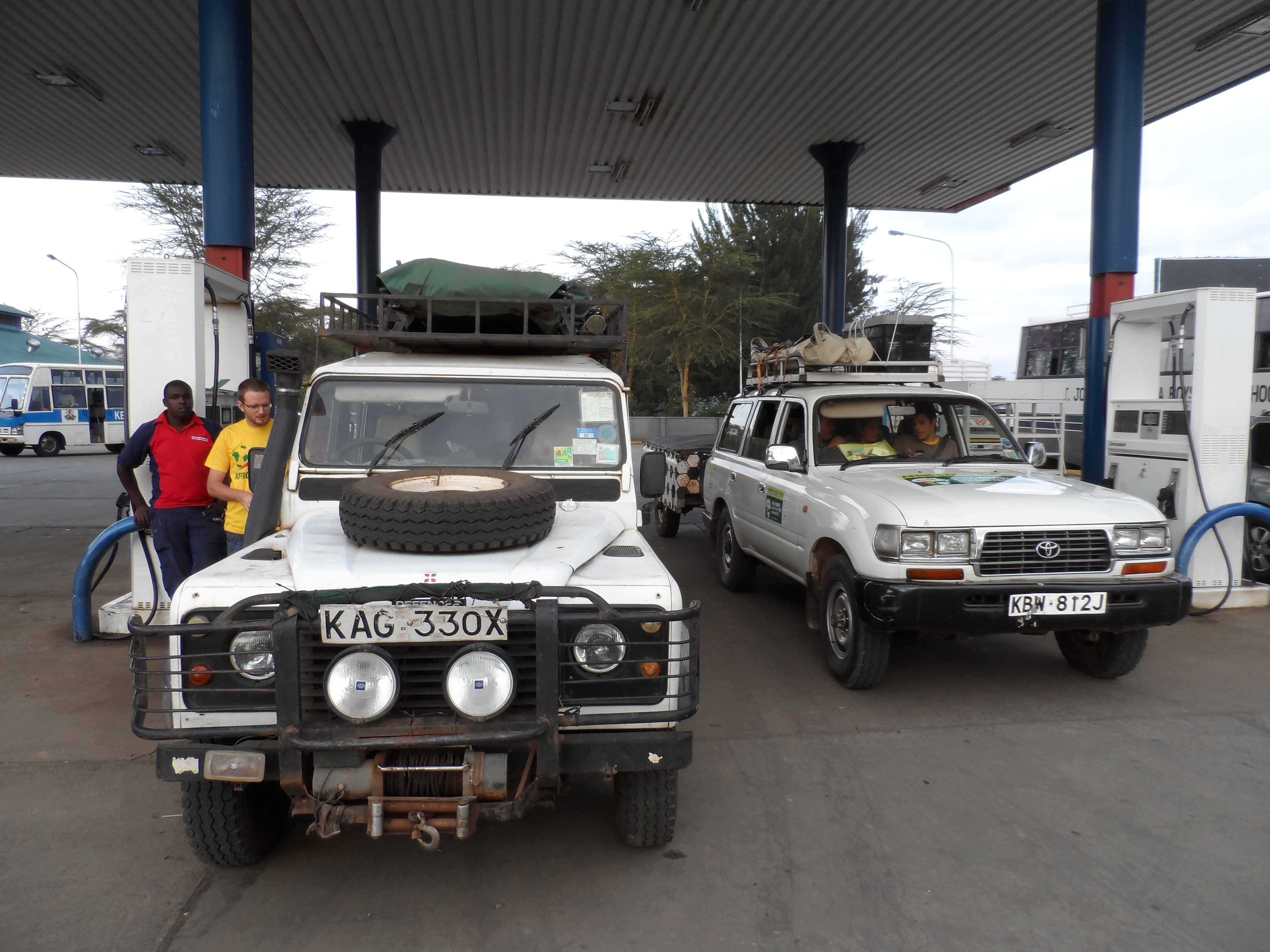
Now it’s all over and we’re driving to Johannesburg trying grasp the fact that the journey’s finished, mission accomplished. We’ve had the most incredible month. There has been malaria, countless car issues, some pretty sub standard food and sleep deprivation but there’s been so much more to outweigh that.
It has been 30 days of beautiful landscapes, unexpected moments and inspirational people. We’ve shared the love of football and pride in the African continent that won the right to host such a prestigious tournament. We’ve also worked with health workers and HIV activists in their drive to tackle the spread of the virus. So much work is being done, so much energy and inspiration is being directed towards this issue and we are proud to have supported some of the groups across Eastern and Southern Africa who hope to make Africa free from HIV.
Jozini
By Cynara Vetch
We drove out of Jozini town in Kwa Zulu Natal through a dusty, dusky pink sunset, our vuvuzelas blaring out the windows. We were ready and excited for the penultimate game of the World Cup.
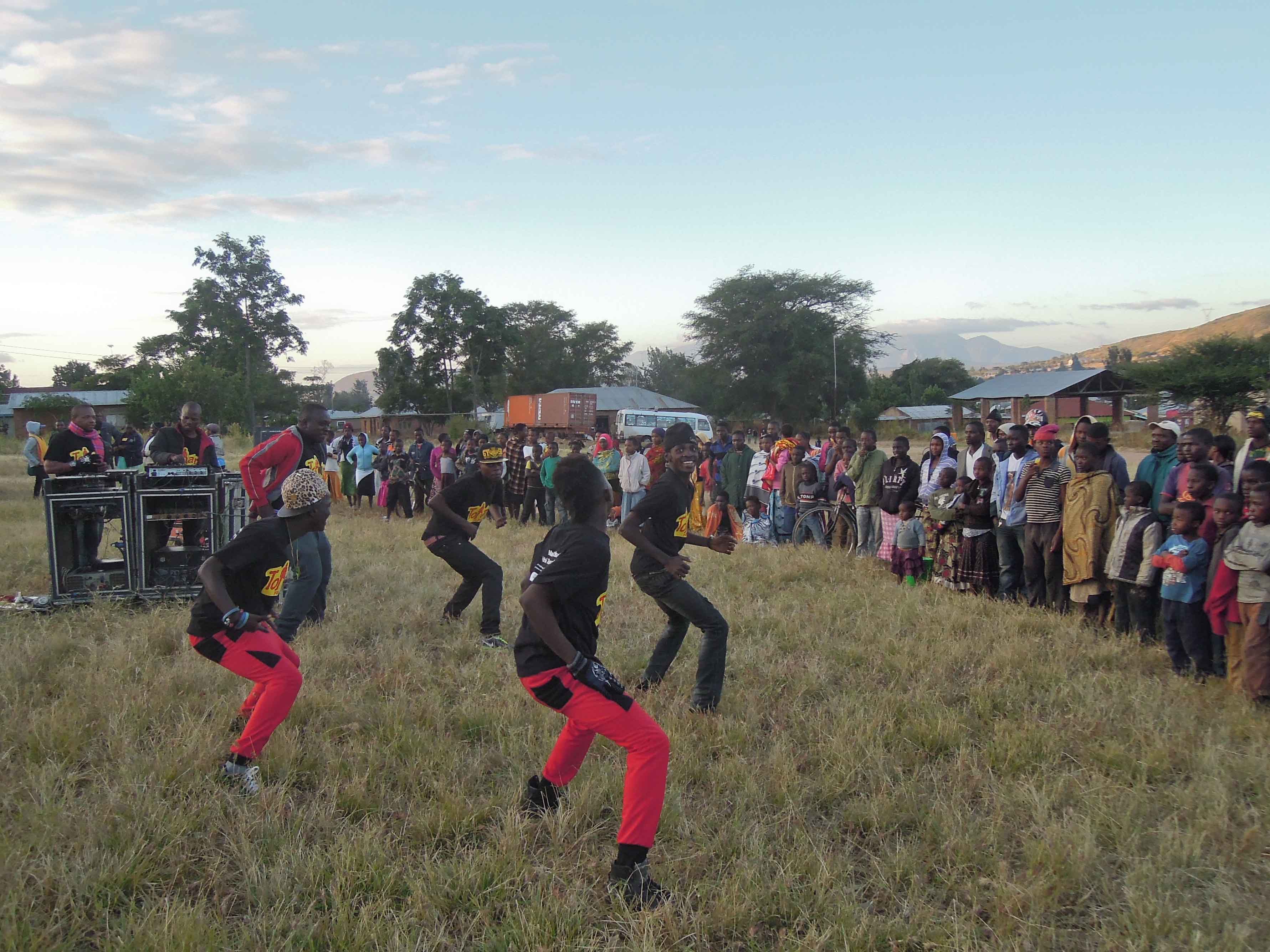
While we waited for a crowd to grow we put on some music videos and the place exploded. Every where we’ve gone any music has got people dancing and this was no exception, we had people shaking and swaying in the car spotlights round the screen and into the shadows at the back. It was turned into a bit of a competition and the slickest dance moves were rewarded with Africa Wins t-shirts and vuvuzelas.
It is great to be a part of the World Cup fever here in South Africa. Football is an important sport in the country and played a big role in South Africans day to day lives whilst they dealt with the brutality of apartheid. In his book ‘Africa United’ Steve Bloomfield interviewed John ‘Shoes’ Moshoeu, a former team member of Bafana Bafana, the national team.
Football during apartheid was a release, Shoes explained. Born and raised in Soweto at the height of the battles against apartheid, Shoes has been playing football since he was a small boy. ‘We could forget about everything else and just play,’ he said, whether they were kicking a plastic ball around the township’s dusty streets or watching the two giants of South African football, Orlando Pirates and Kaizer Chiefs, play at Soccer City.
‘You can play anywhere, anytime. You don’t need specific equipment. You can get something round to kick about. For me, football is a poor man’s sport. It has given a lot of people from underprivileged societies a lease of life. It was something that would make us happy. Something where black people would be in a position to win, to conquer. Unlike other things.’ He’s old enough to remember ‘the fumes of the tear gas’ during the Soweto uprising in 1976, and was playing professional football in the township for Kaizer Chiefs during the last violent days of apartheid.
Nelson Mandela became the first black president in 1994 and South Africa is now basking in the glow of a successful World Cup. However the legacy of the past still impacts people living in the country today. We partnered with AMREF who run a project tackling Gender Based Violence (GBV) in the province of Kwa Zulu Natal in the North East of the country. Sthandwa Mnqayi coordinates the programme , she told me “We grew up with a lot of violence within society and within the family. This has led to violence within relationships and we have a big problem with rape.”
For Sthandwa this aggression and violence against women is closely interlinked with the spread of HIV and AIDS “It is still a man’s world here” she noted “men have all the power in relationships they do what they want to do, women aren’t able to negotiate to use condoms.” All this means that the province of Kwa Zulu Natal has one of the highest HIV rates in the country, in the last census 39.9% of women who had been to an antenatal clinic were HIV positive.
For tonight at least the women seemed to be firmly in control, they definitely dominated the dancing, one large lady in particular. She had a booming laugh and firm ideas on how to use the dance floor, “dance like a snake, move like a snake” she advised us and won a t-shirt effortlessly.
With no satellite hitches and a fun animated crowd it felt like a very special screening, particularly when Germany won. The match satisfied our German supporters and we got our revenge on the Uruguians who had robbed Ghana of victory.
Only the final to go now and our Africa Goal journey is complete.
Swaziland
By Cynara Vetch
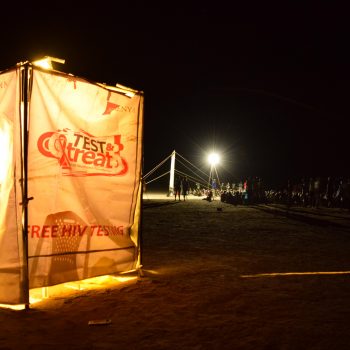
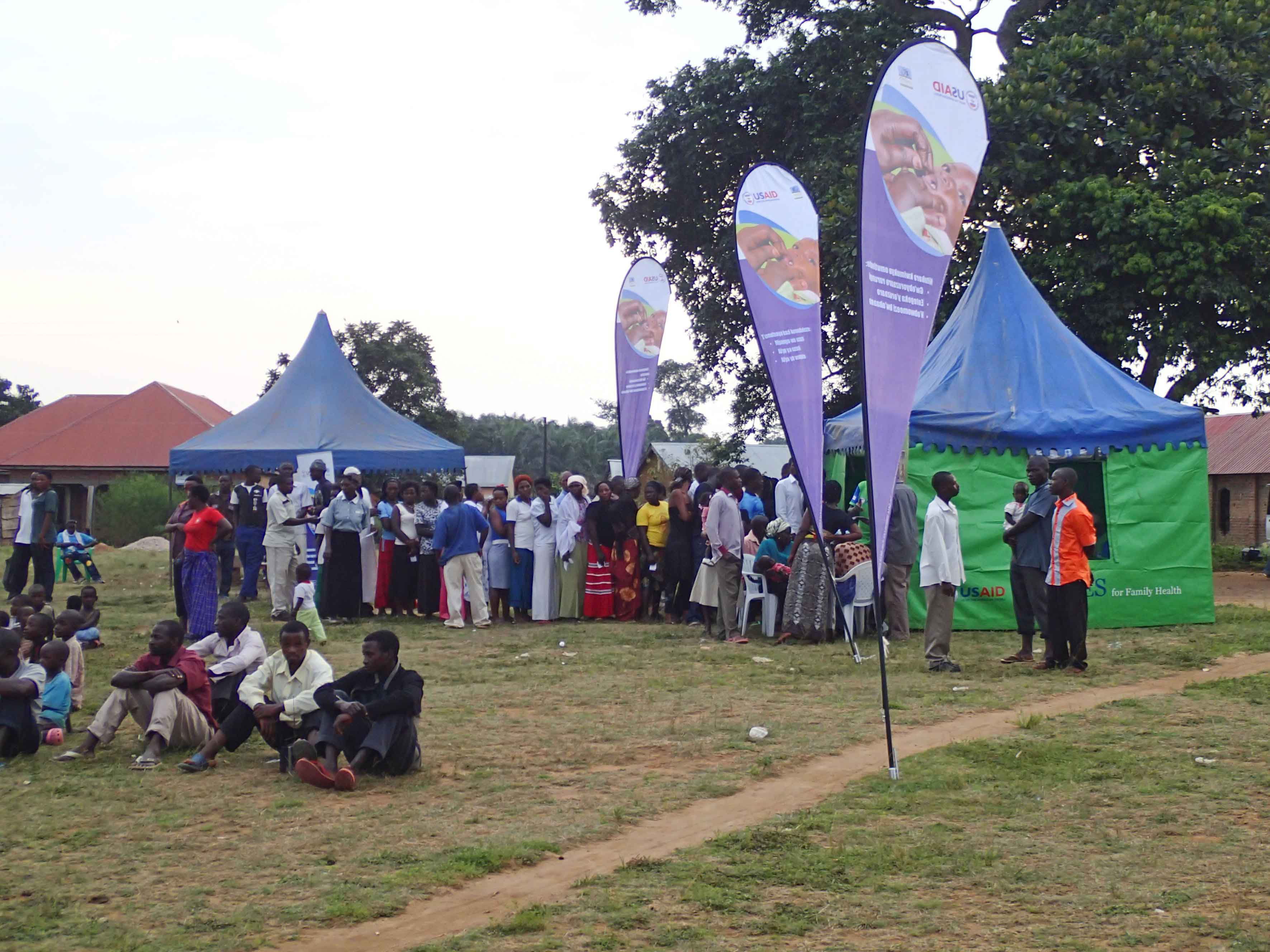
We held our Swaziland screening below the Royal Palace of King Mswati III, the small country’s polygamous king . We arrived to a football tournament wih a 4000 strong crowd and elaborate tents were up set up to host the Minister of Health and the Minister of Tourism. VCT testing was provided by PSI and NATTICC, a Swazi based HIV organisation .
Hon Benedict Xapa, the Minister of Health had taken up the Africa Goal project as an opportunity to tackle HIV prevalence in his country. Swaziland has the highest rate of HIV in the world. The day had been featured heavily on the country’s television and radio stations and we were excited to see a big spread on Africa Goal in the national broadsheet and a television feature the next day!
We were welcomed into the Kingdom by the Minister and were treated to a delicious banquet. The Ministry of Health and SAfAIDS had provided food for 800 people and volunteers had been cooking over fires in their traditional cast iron pots since 5:00 that morning.
A counsellor who didn’t want to be named explained why HIV has spread so far through the country “It is because of our traditional way of life” she noted “men often have many wives. We also have many traditions. which can put people at risk such as the practice of giving young girls from poor families to be junior wives to rich families.”
Currently the King has 13 wives, his father ended his reign with more than double this number and the custom is unlikely to change any time soon. Rather than criticise the practice HIV activists in Swaziland educate people on “the importance of protecting themselves with a condom every time they have sex and with every partner.”
There is also a big drive to encourage male circumcision, the government has pledged a 100% circumcision rate amongst young men. At the prize giving Mr Xapa spoke to the captains of the football teams and urged them to set up health clubs at their different schools, any groups that were established the minister to pledged to have funded, the idea is that these young men will be leaders for their generation and persuade their friends and class mates to stop the spread of HIV.
Having climbed the roof a building and hung the screen high so the crowd would be able to see the game, we spent a frantic four hours desperately trying to get our satellite reception. Sadly due to a cancellation of our subscription by DSTV and communication problems we weren’t able to get signal. We went the tried and tested route and streamed the match through a grainy television set.
The technical problems were frustrating but we all agreed that the warm welcome from the Swazi people was one of the highlights of our journey. A journey that is quickly coming to a close. Only two more matches to go and these will be held in South Africa, home of the 2010 World Cup.
Maputo Screening
The Waving Flag song, which has become synonymous with the Word Cup is blared out of speakers at the administration offices of the Zimpeto Barrio on the outskirts of Mozambique’s capital Maputo. A crowd of young students just returning from school quickly gathered and circled round a big screen, while we projected a video and later screened the Netherlands vs Uruguay Semi-final.
The HIV/AIDS community in Mozambique is working hard to educate people about the dangers of Multiple Concurrent Partners (MCPs) but there is need for a ‘mainstreaming’ of the issue. There is still a conservative attitude with regards to discussing subjects such as sexual behaviour and some HIV activists have been using the World Cup as a way to draw people to discuss the issue.
David Magaia is a Research Manager with Nweti Trust, Nweti is an organisation which focuses on health and development communication. He says that about 70% of people in Mozambique are involved in MCPs and that this a key driver for the 16.1% HIV prevalence in the country.
Working with the One Love Campaign Nweti Trust is trying to address this trend but it is not a simple task. David says “soccer is one of the events that brings people together different races, colours and creeds. Many people are so much involved in this that we can really spread the information about HIV. I think it is a wonderful thing and it works because we need to have a main streaming of HIV and AIDS in everything that we do.”
Football is avidly followed in Mozambique as it is in most of Southern Africa and the local administration in the Maputo District and Nweti Trust linked up to work with the Africa Goal project which has been screening the World Cup matches through East and Southern Africa and linking with local partners who are working in HIV/AIDS education and advocacy.
Fernando Chilwane the Secretario of the Zimpeto Barrio on the outskirts of Maputo where the screening was held. Fernando was a keen footballer in his youth but now has the physique of a successful politician and only plays for 10-15 minutes every now and then to remember the old buzz. He is concerned about HIV prevalence in the Maputo district, which has one of the highest rates in the country. He believes that events like this are key to support HIV activists because there is a lack of information amongst his constituents “Children don’t learn about health issues in schools and families never talk about it, people are embarrassed to talk about sex, we need more work on this and have more events such as these.”
Young Mozambiqans may be coy talking about sex with their parents but they are stylish and sassy and were more than happy to voice their opinions about MCPs at the screenings discussions.
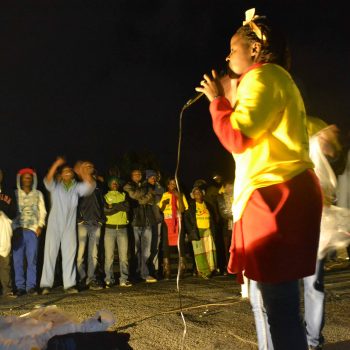
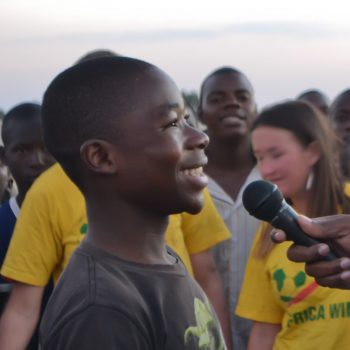
One boy was inspired to recite some spoken word poetry, he strode out into the centre of the circle, his beanie pulled low and the microphone in his hand. David translated the Portugese “The poem was about the African cries, people crying because of what HIV is doing in Africa. He mentioned the behaviour of many young people he spoke about inter generational sex…. all these things bring about the spread of HIV which is killing so many people. Even though he ended up by bringing the aspect of hope we hold our hands together still we can have a better future.”
The Africa Goal project continues onto Swaziland now but the local government and CBOs in the area will now be looking for similar initiatives which David belives will “boost the efforts that are being done to reduce the spread of HIV and…motivate us further.”
Maputo
By Cynara Vetch
Today’s screening was in the capital Maputo and after making up 900 HIV information football bags till 1:00 in the morning, we set off early for a 12 hour drive. We arrived at the administration headquarters of Zimpeto,on the outskirts of the city and then for the first time in 27 days we had satellite problems. As the minutes sped by kick off time grew nearer and the team got more and more tense.
Luckily we were working with David Magaia from Nweti Trust who was calm, professional and unwaveringly optimistic. Whilst we had technical difficulties David ran a One Love video about Multiple Concurrent Partnerships (MCPs) and then led a discussion. David believes that about 70% of people are in MCPs and HIV prevalence in Maputo district is one of the highest in the country.
David told me “It’s about passion, I feel I have responsibility because when one has knowledge, he has to pass that knowledge to other people. I’m a reverend and I talk to my church a lot about HIV, I feel I have responsibility to my community to tell people, tell my friends that there is chance of having our community free of HIV”
David is very enthusisatic about the project, he told the camera crew “We can be doing our work but there a new things that come that motivate us more and I think that Africa Goal initiative is in 2010 is one of the best initiatives which is motivating people to understand that the effort to fight HIV is not just for one person but is for all of us.”
The young men and women were confident and enthusiastic about the discussions and keen to explain what their experiences. It was great to see sophisticated, confident young women talking about their lives and relationships. Too often at our screenings the women have been reticent and shy while their male counterparts have dominated the events. David drew them out getting them talk about what they looked for in partner and how they could protect themselves from HIV.
Finally the technical difficulties were sorted and we caught the last 15 minutes of the Netherlands/Uruguay game, which turned out to be to be pretty exciting with Uruguay scoring a second goal in the 89th minute of the game. They didn’t equalise though and the team packed down with a sigh of relief, the Ghana defeat at the hands of the Uruguayians was still branded into us and we weren’t interested in seeing them go any further.
Villanculos
We’re now in Mozambique, which is an incredibly beautiful country. It’s vast though and we’ve spent days driving through stretches of fan palms and trees heavy with bright orange tangerines.
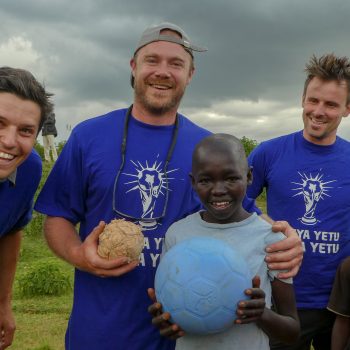
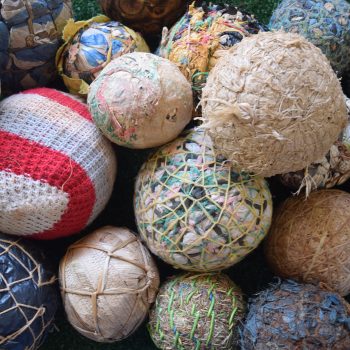
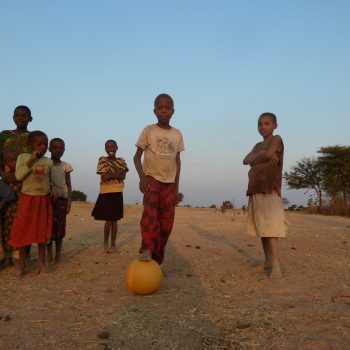
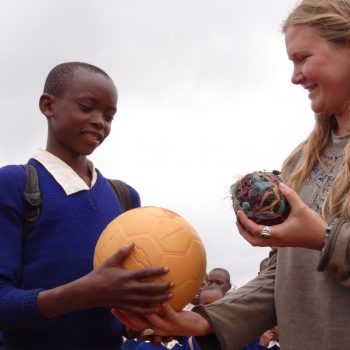
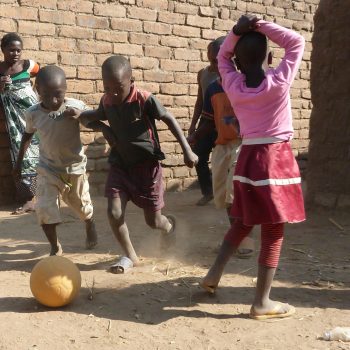
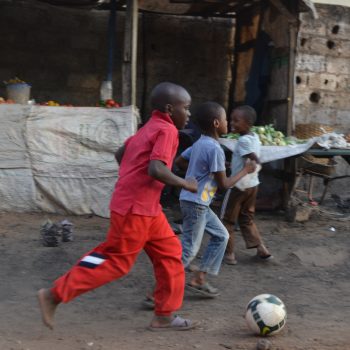
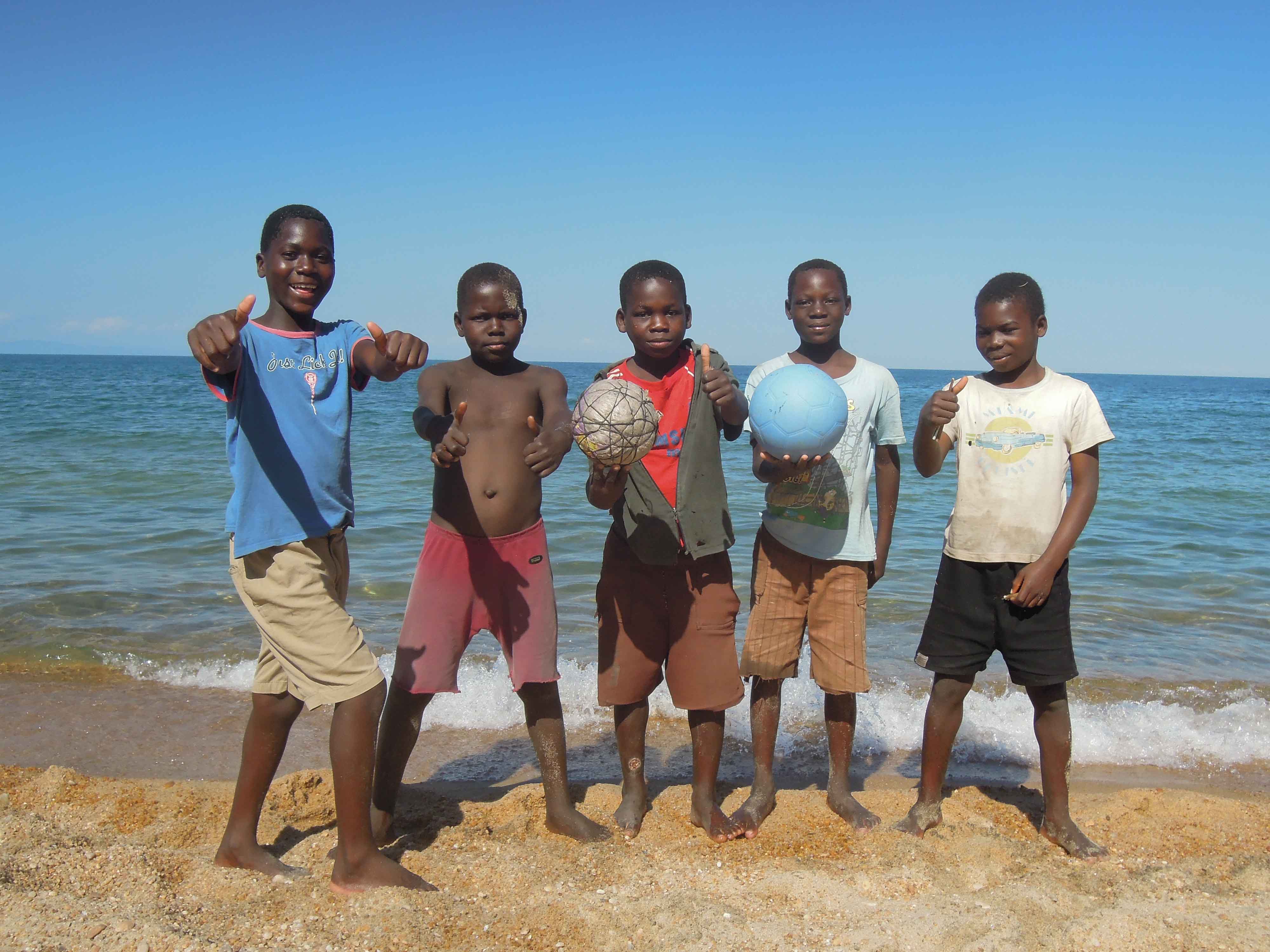
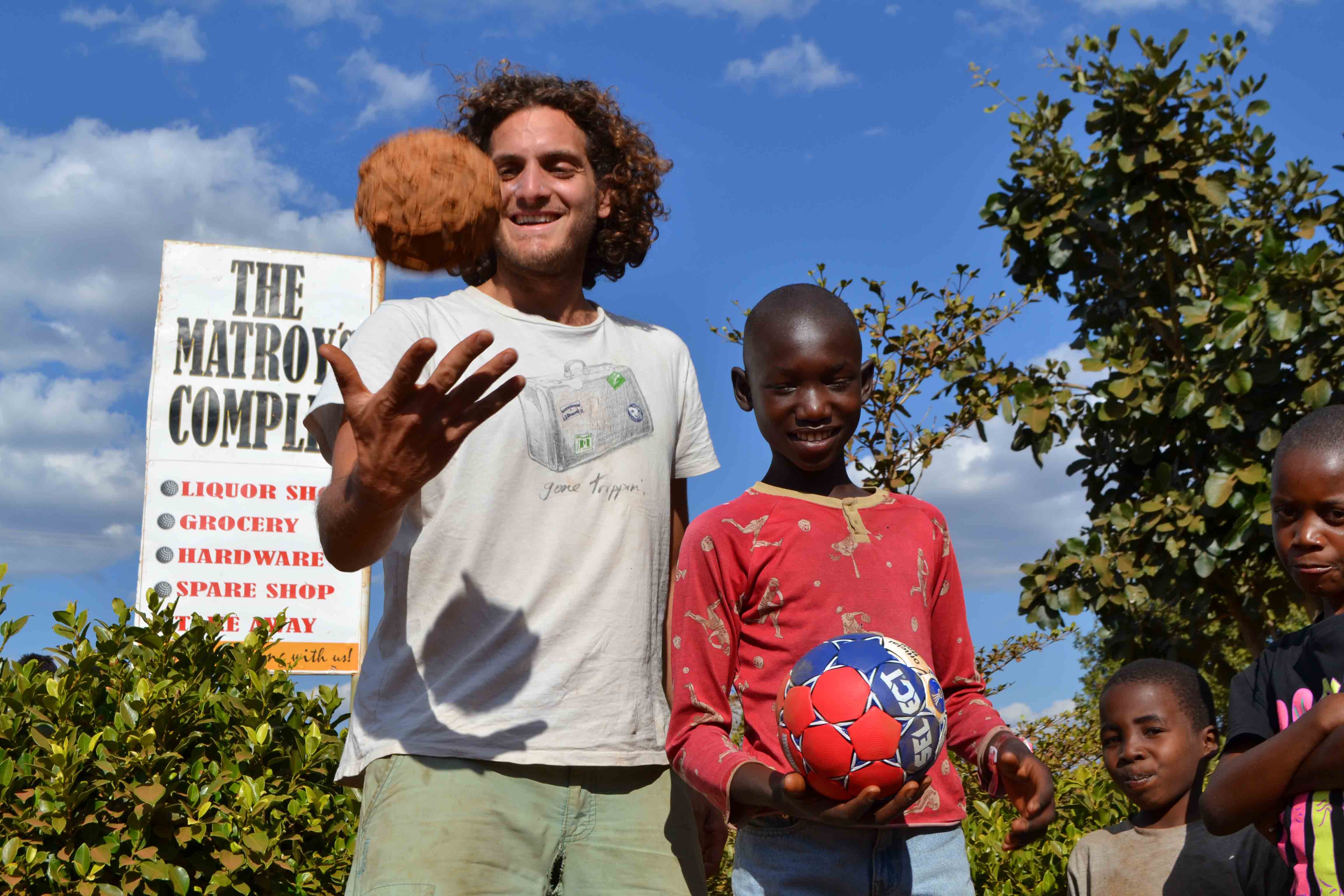
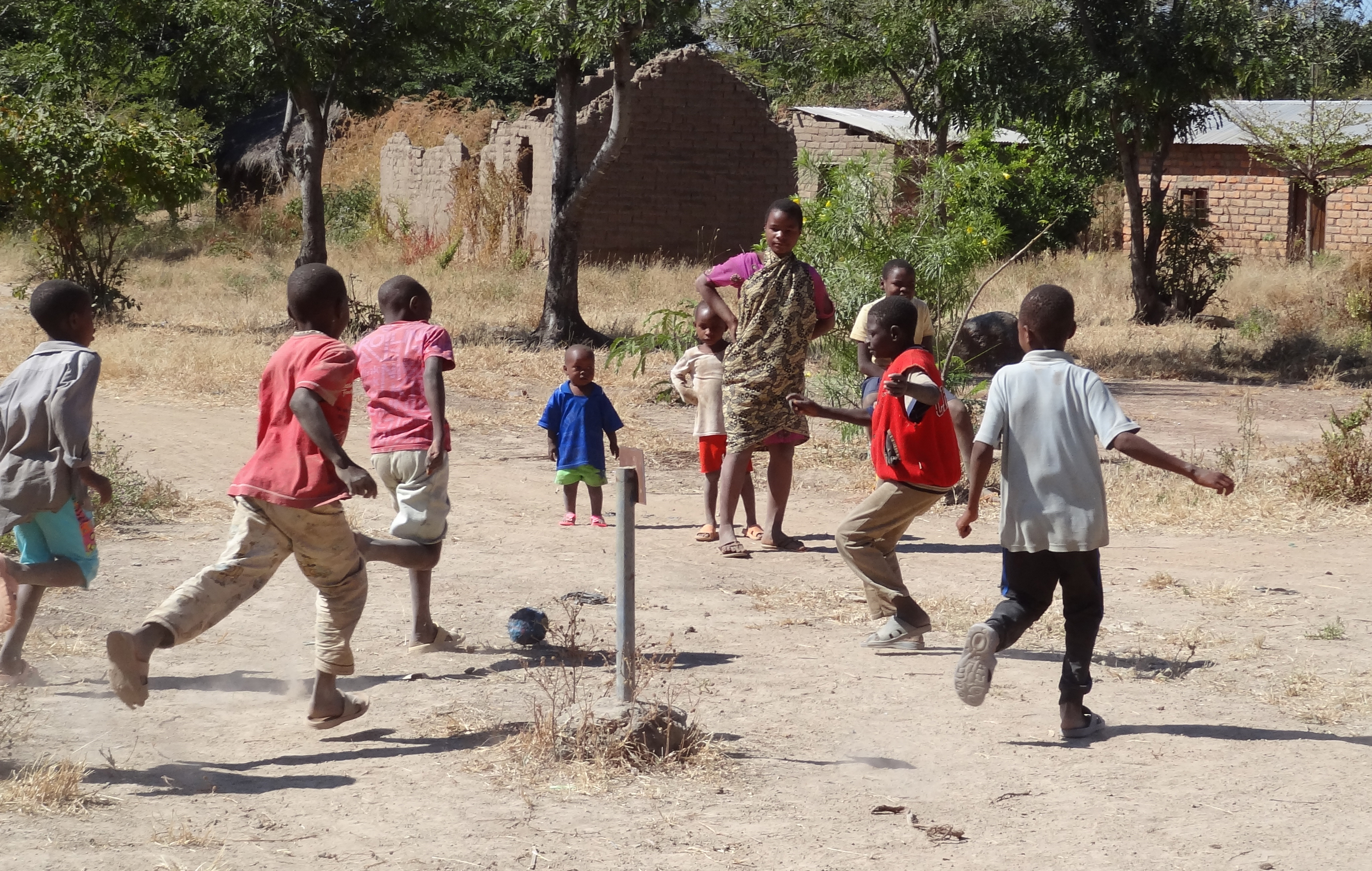
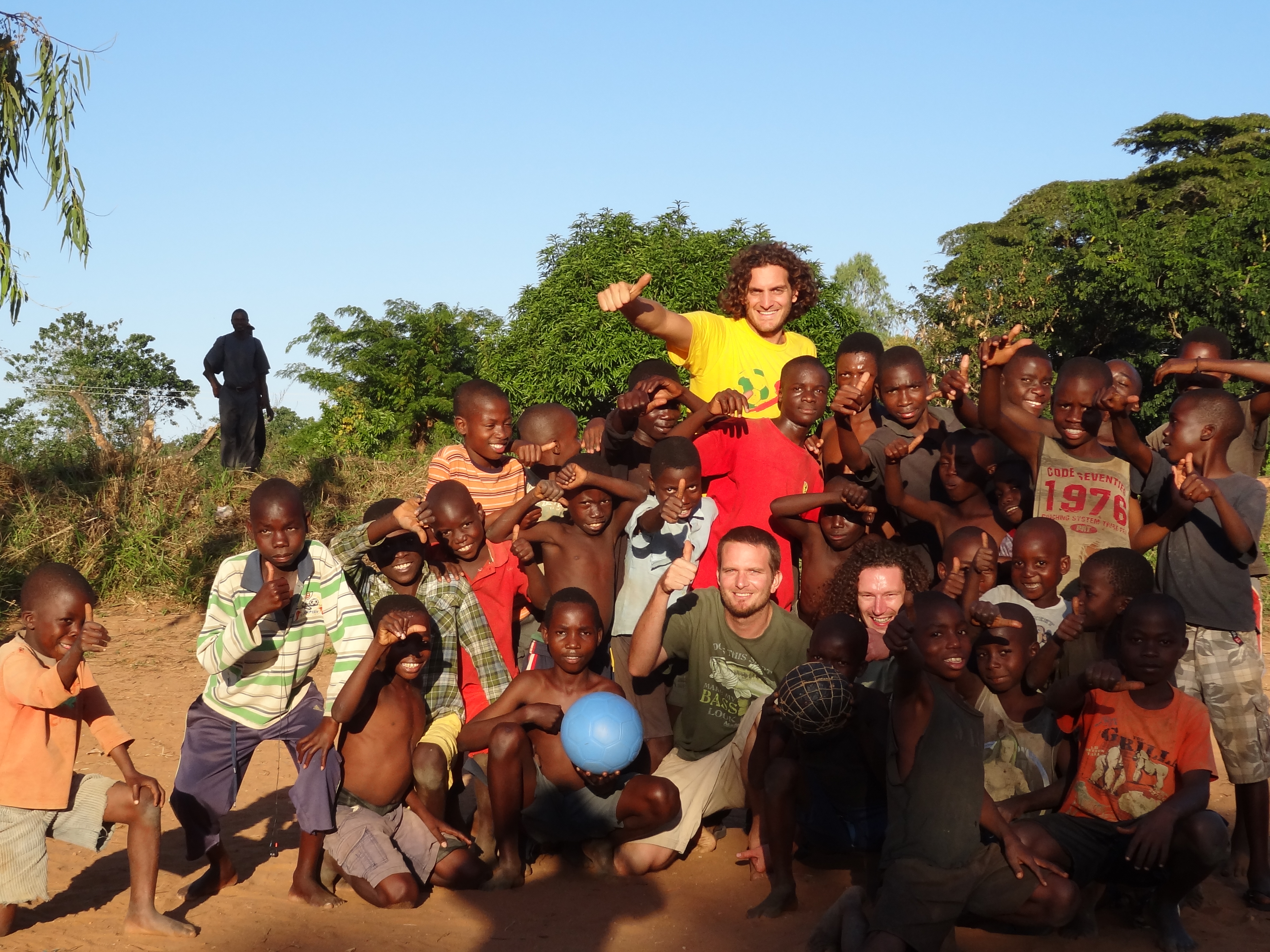
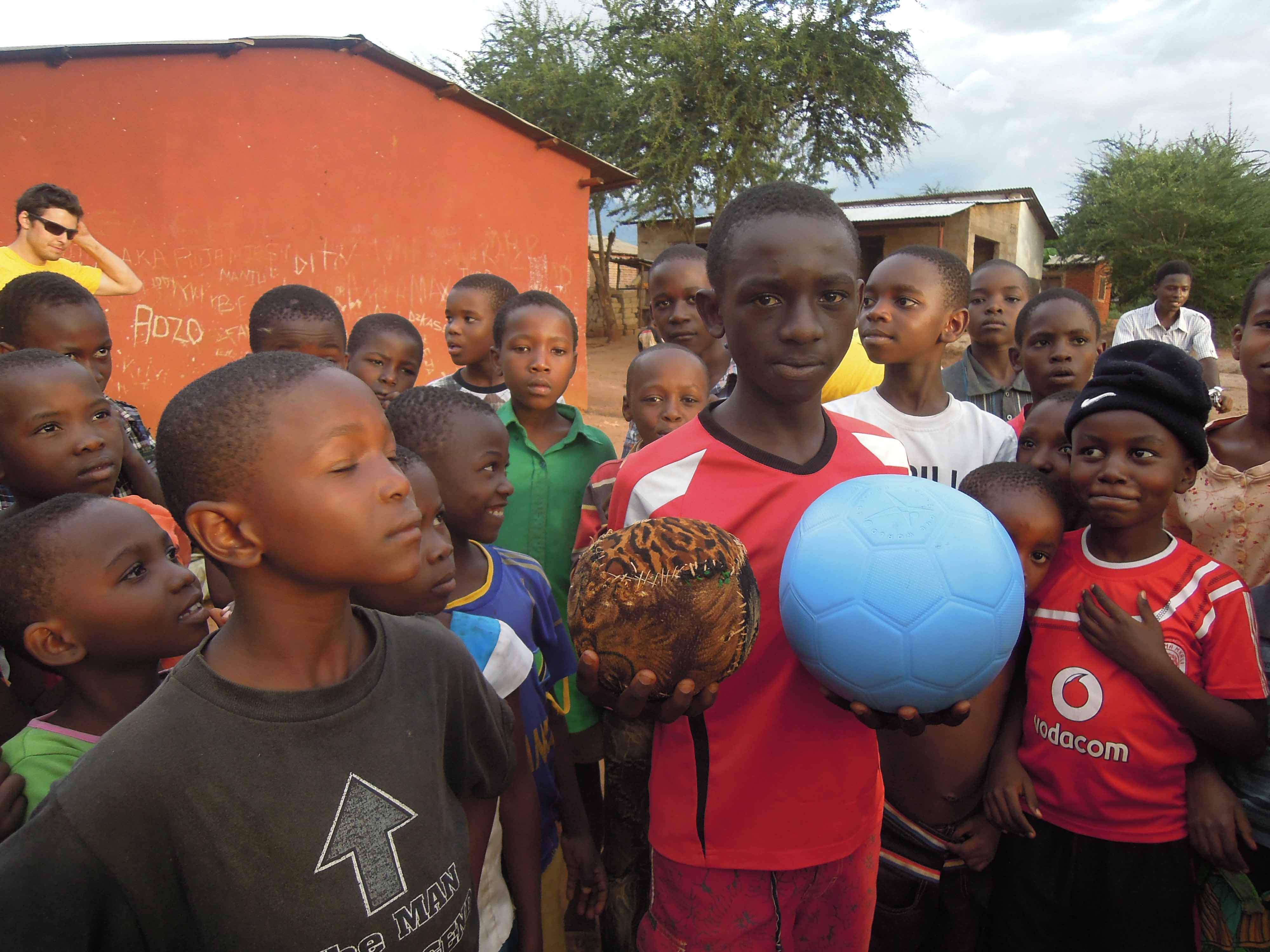
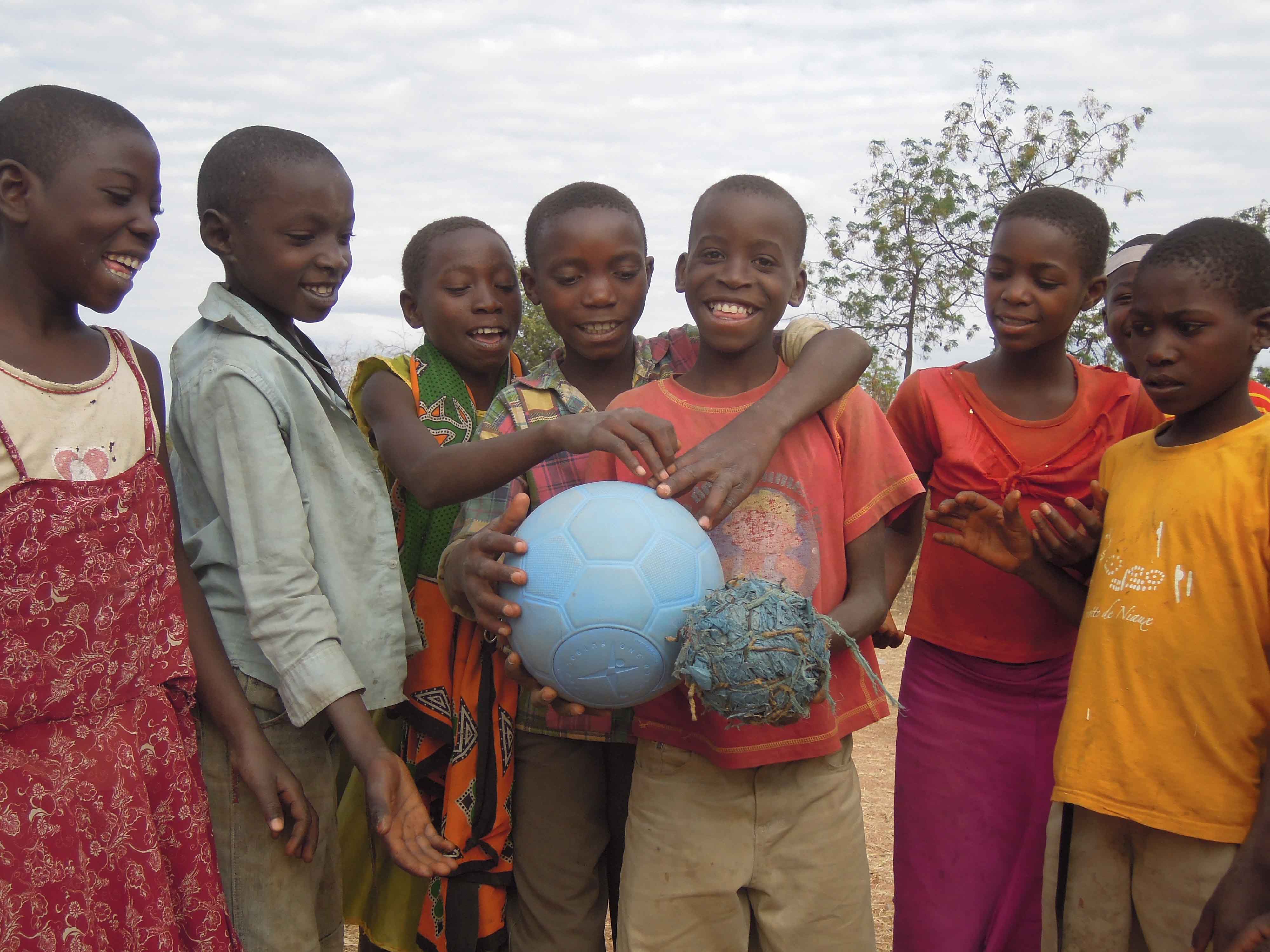
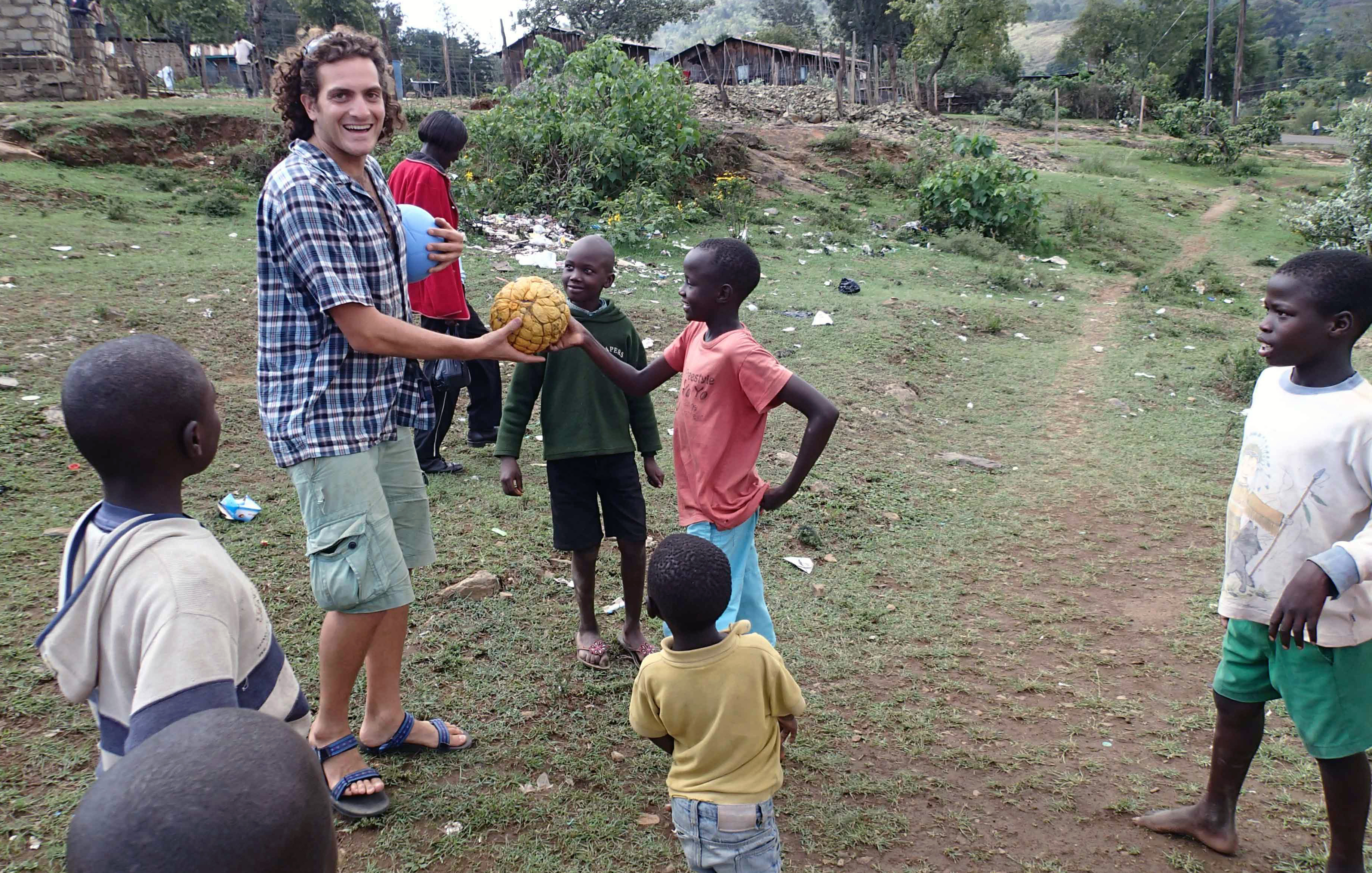
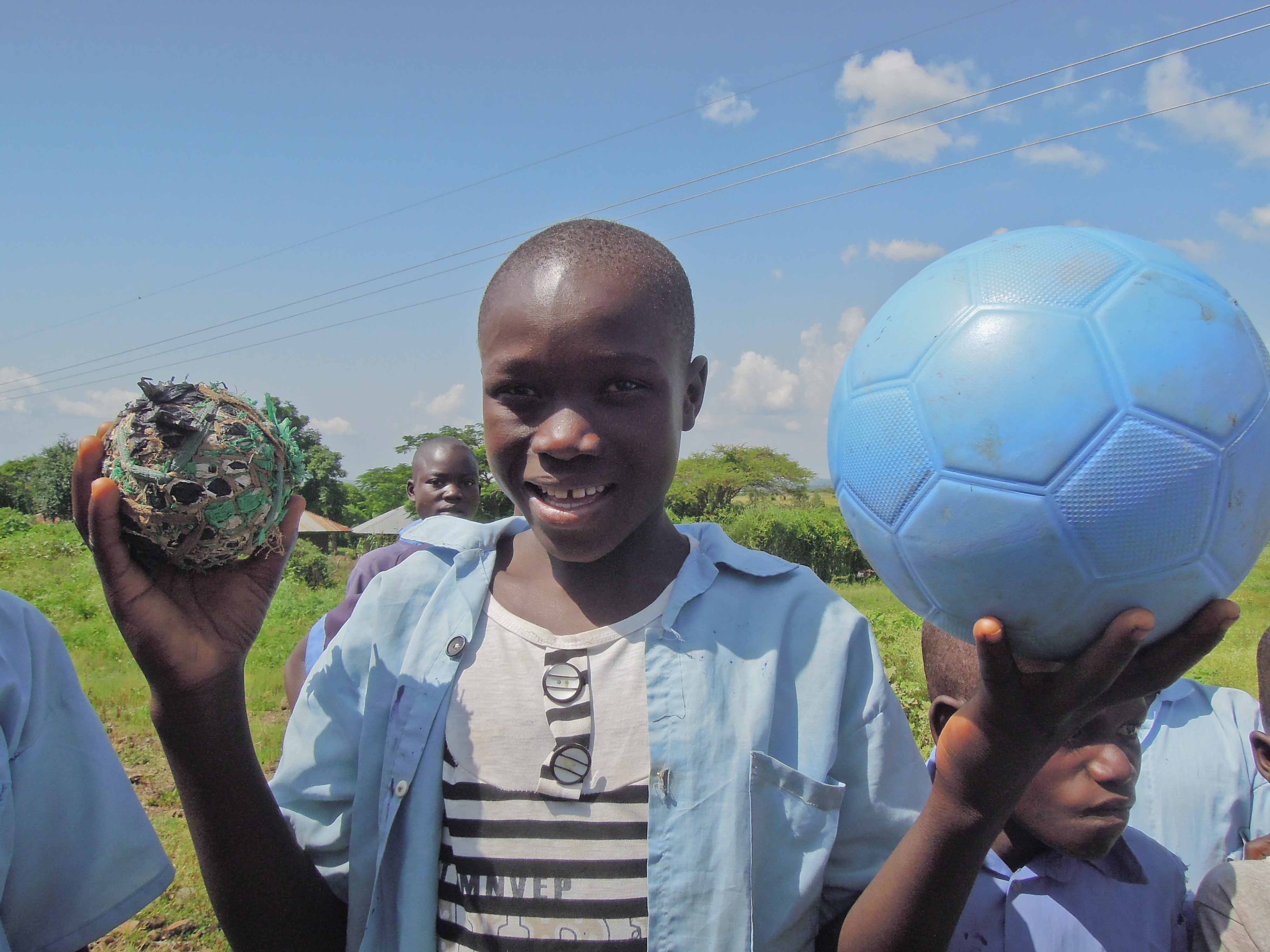
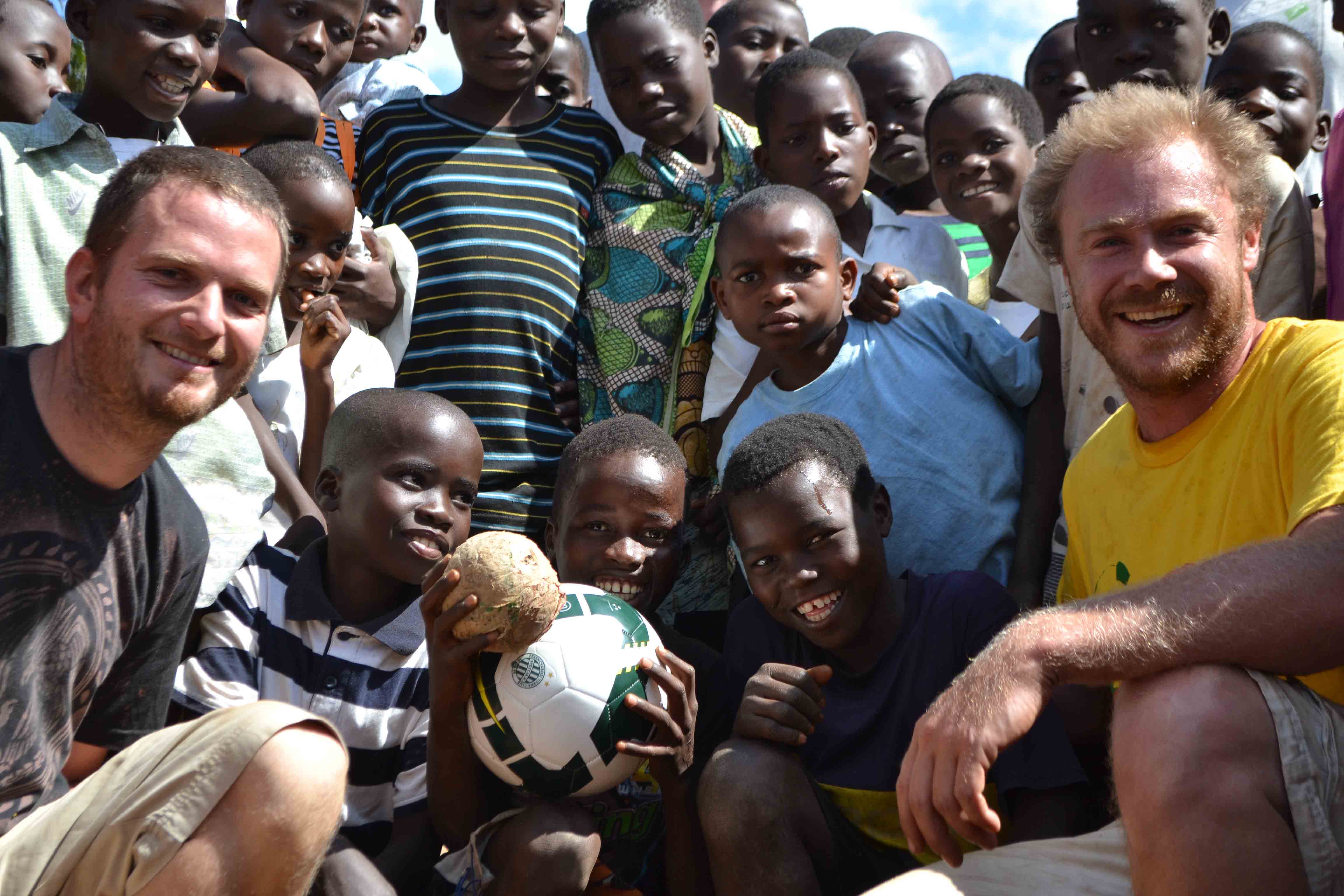
We spent a day and a night in Villanculos. In town we found some children playing football in the side streets, they were singing ‘Waving Flags’ a song by a Somali Canadian, which has become synonymous with the World Cup. Two boys called Alejandro and Emanuel were playing with homemade bolas and were excited to swap them for our footballs. They could hardly believe their luck and and ran off down the sand road just in case we changed our minds.
Seke Screening
By Cynara Vetch
Tonight we had our Zimbabwe match. Football is passionately supported in the country and during difficult times it has remained a constant for Zimbabweans. In Steve Bloomfield’s book ‘Africa United’ he explains the importance of the sport and the national team, The Warriors. Steve writes that.
Zimbabwean football was in a bad state, but it could have been so much worse. Yes, the football association hadn’t bothered to pay a national coach for the last eighteen months, and yes, there was clearly no money and little hope of sponsorship to fund the leagues and cup. But during the worst years… at a time when every other part of Zimbabwean life was falling apart, the country’s footballers had managed to compete with some of Africa’s finest. The Warriors had managed to qualify for the Africa Cup of Nations, and
Dynamos had reached the semi-finals of the African Champions League. Given the circumstances, they were remarkable achievements. Against a backdrop of hunger, violence and uncertainty, these teams had brought a slice of normality and success to a country starved of both.
We held the screening in Seke, a district neighbouring Harare. We set up amongst a collection of roadside shops and I went to speak to our partners.
Dennis Dzikiti and Ndangariro Kanonhawa are Programme Officers with Seke Rural Home Based Care. Many of those they work with are too sick or weak to travel and get medical assistance. I asked why it was that their 3500 home based care clients left taking medication so late that their condition had deteriorated to this stage. Ndangariro explained “the whole process takes a long time from testing to accessing the drugs. This community can only afford to have the process done in government hospitals. There are huge waiting lists and the machines needed can break down for months or can’t be used because of power cuts. Meanwhile those that have been diagnosed as HIV positive are getting sicker.” Dennis left his job working for the Department of Social Welfare for similar reasons he said that he was “tired of having people come to me for help but having no resources to do anything about it. Now with an NGO I feel that I can actually assist people.”
The Government of Canada is responsible for the majority of funding for Africa Goal and Denis Langlois the Canadian Embassy representative made the long drive out from Harare with his three young daughters. He was supportive of the project and urged everyone “to keep up the good work.”
Juliet Mkaronda is the Programmes Manager for SAfAIDS who partners with Seke regularly. She is also supportive of their work but admits that the recent troubles in the country have made life hard for those with HIV. However it is her belief that there is a positive outlook for the future “things are really getting better, we have an AIDS levy, which means that every formally employed person in the country pays the National AIDS Council directly a percentage of their salaries. Now with a newly stable economy this could provide ARVS for the majority of those living with HIV.”
We left a community dancing in celebration to a Netherlands victory over Brazil. As we were packing up people clamoured for condoms and we drove away feeling that in Seke at least Zimbabweans are educated and aware about HIV and ready to protect themselves and their families.
Siavonga, Zambia
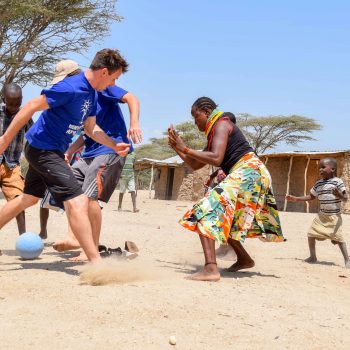
In 2006 we visited a little village outside of Siavonga town and had a great game with the children on the community pitch. Four years later we were back to play another match and even managed to find some of our old opponents.
With the light fading we left the village and headed into the town centre for the screening, we were surprised to find the village headman there. Patson Mulopwe inherited the traditional position from his father and said that as a headman people trust him because “a headman is the gatherer of information, a person who is supposed be respected and interact easily with his subjects. I am responsible for assisting the underpriviledged in all aspects of live and bring justice to everyone in the village.”
Patson has joined the areas Local AIDS Taskforce because he believes that the AIDS orphans are one of the serious problems his people face, he told me “I joined the AIDS Task Force is because my personal feeling from what I have seen is how these AIDS orphans suffer when they lose their parents and the lack of support in the community…. people don’t want to share the little they have with others.”
Godfrey Kalaluka is the District AIDS Coordinator (DAC), he links all HIV and AIDS projects in the district he said “there are many orphans here and child headed households. Children here often have to fend for themselves, looking after many brothers and sisters.” pointing to the children clustered around the screen he said that most of them would have no adults looking out for them.
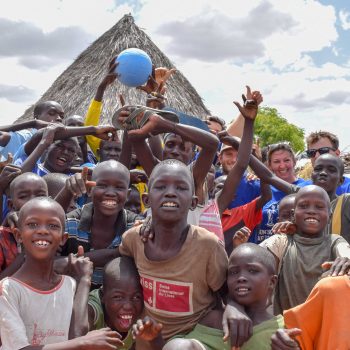
The kids were very excited about the game and also the t-shirts and vuvuzelas that they won. We sat amongst them at the front and it was a lot of fun sharing their anticipation and eruptions of applause to any fancy footwork. Brazil dazzled in their yellow and as far as you could look there were people perched on platforms, leaning through windows all intent on the game. But as the night wore on it got colder and the children sat on the damp ground, huddled together though they were, didn’t have enough clothes to stay warm. They tucked their arms in their t-shirts and wrapped them round their knees but there was no one to make sure they didn’t catch cold.
When we packed up we were treated to an impromptu dance performance by five of the children. They incorporated their vuvulezas and sang us a song, waving furiously as we drove away. We left touched that they had enjoyed the evening but wondering where they would be spending the rest of the night.
Bwafano, Zambia
By Cynara Vetch
After our very urban game in Lusaka we headed to the outskirts of the city to Bwafano Community School, which educates children ranging from 4-16 years old. The school had set up a football tournament. As the first team set off in their canary yellow football-shirts, a group of peer educators sat with the other squads and discussed HIV issues. One big theme that came up was male circumcision and how it can help reduce HIV, the young men wanted to know why traditional circumcision was being advised against in favour of a medical operations. Paul Kasoukouona, a HIV activist explained that “The traditional method is all centred around the same knife that serves many young initiates and this leads to problems of infection and the spread of HIV and AIDS”. Health workers recommend having the foreskin removed by a doctor in a sanitised environment. We were impressed with the high level of knowledge amongst the young men and their interest HIV prevention. Everywhere we go however it seems that the youth are being targeted as group that needs more education and assistance. I asked Paul why it was that this knowledge is not transferring into behaviour change and why HIV is still being spread amongst young men and women. An issue that assists the spread of the virus amongst young Zambians, is a law that makes it illegal for anyone under 16 to have an HIV test without their parent’s consent. Paul is pushing for this law to be abolished he says that “parents often refuse to allow their children to go for a test, they think that if their sons or daughters are found positive it looks like the parents themselves are promiscuous and will be judged by their community.”
The older generations also speak of un-licensed underage drinking in illegal bars that cater to children. Here you find girls and boys no older than 16 drunk by 8am in the morning. Anyone’s money is welcome in these establishments and the accessible alcohol means that young people get careless and have unsafe sex.
For tonight at least the football teams were much more interested in ‘good, clean fun’ and the Germany vs England match provided more than enough entertainment. The Africa Goal is split between England and German supporters, so some felt robbed by England’s disallowed goal, while those with bright German flags painted across their cheeks left Bwafano in a glow of pride for Deutscheland.
Zambia’s homophobia
By Cynara Vetch
We held tonight’s screening in George, Lusaka’s oldest residential district. It was the centre for freedom fighters of the Zambian independence movement and remains very political today. Paul Kasoukouona is an HIV activist working for the Southern African Treatment and Access Movement he’s been working on HIV/AIDS issues for 10 years he told me “ this is one area where the government can’t even enter everyone is for the opposition. There are elections next year and if there is vote rigging again and the government gets in there will be serious problems, people will be rioting in the streets.”
George has one of the highest HIV rates in Zambia and also the highest crime rate in the country. A lot of this has to deal with high unemployment, Paul explained “ If you lose your job today you don’t know when you will get another. People have big families that expand because of the high number of AIDS orphans that must be supported. When it is 8 people to a room parents encourage their children to go out and do commercial sex work in the evenings. This means more money for the family and space so that they can actually fit into their accommodation.”
Paul was contacted by SAfAIDS to lead a discussion with the community leaders about HIV related issues. One topic which was raised was the issue of homosexuality and lesbians. Initially the leaders denied that there were any gay or lesbian individuals in their communities. Same sex relationships are considered a foreign issue and unZambian this view is exacerbated by the fact that the head of the National AIDS council is a bishop and strongly against homosexuality on religious grounds. The Vice President’s son is homosexual and estranged from his family. The Vice President is pushing for a law to be enacted that encourages people to inform on known homosexuals and lesbians so that can be sent to prison.
Paul works with 2000 gays and lesbians in Lusaka, he is the only straight man in Zambia who speaks out about homosexuality and says that “All my activist work has been difficult but this project in particular has cost me a lot, there are some jobs that will refuse to hire me because I have worked on this issue.” He is lobbying on behalf of gays and lesbians because he believes that “we must use every scientifically proven prevention to stem the spread of the virus” and he has never thought that “you can use Christianity or morality to deal with public health issues.”
Initially tackling the concerns of same sex relationships and HIV was “like hitting a rock and nothing was moving” but now underground groups of lesbians and homosexuals have been set up whose members include doctors, teachers and lawyers and the movement is growing. In this meeting at least there was a consensus that there are same sex partnerships exist in George and HIV and AIDS must be tackled within these relationships as well. However it will take many more such discussions to create an open environment in Zambia which accepts lesbians and gays and enables them to access to treatment and prevention for the virus.